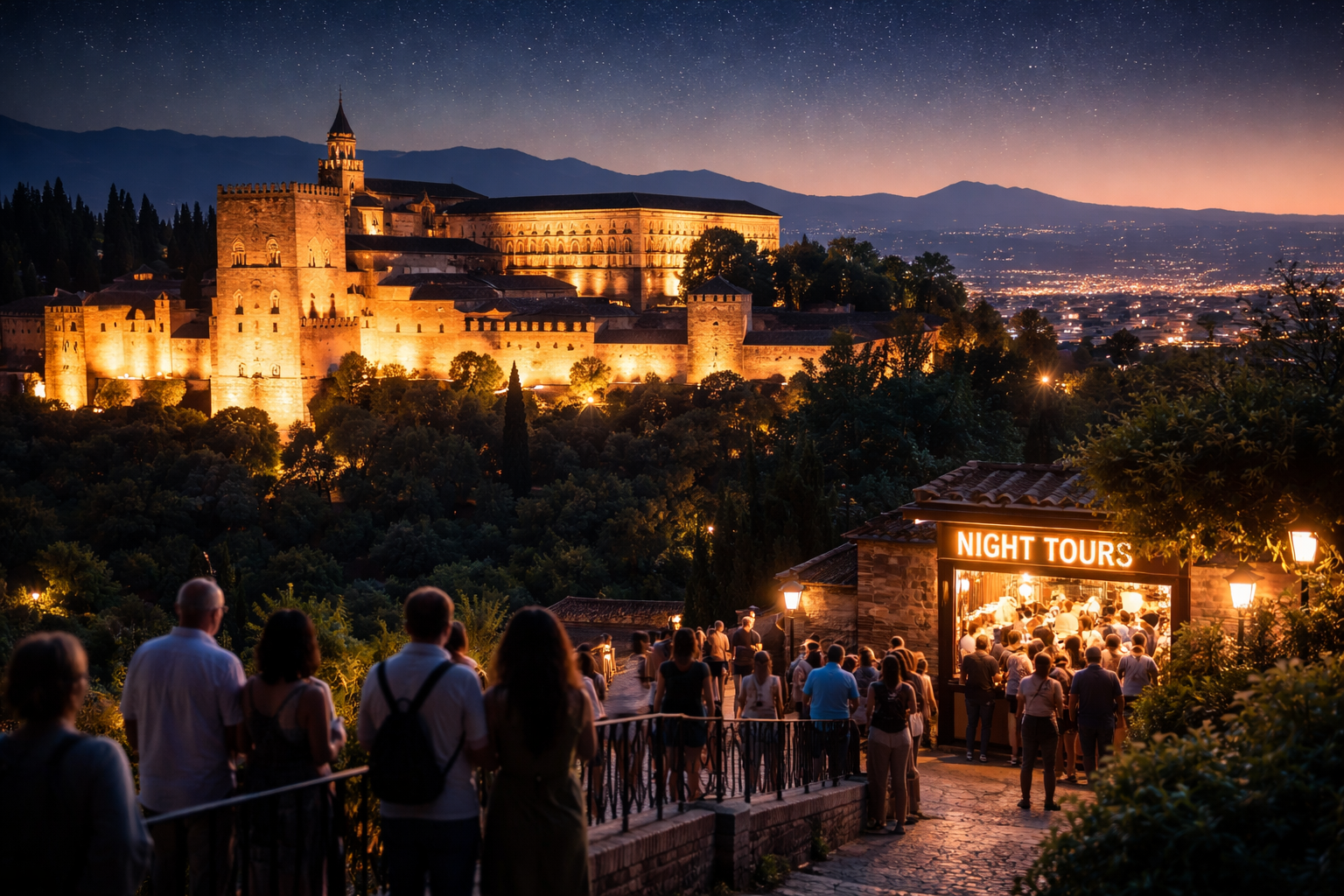
Alhambra Palace night tour attendance revenue represents a fascinating intersection of cultural heritage management, tourism economics, and experiential travel. Perched above the city of Granada, the Alhambra stands as one of Europe’s most treasured historical monuments. While daytime visits have long dominated visitor numbers, the introduction and expansion of carefully managed night tours have reshaped both attendance patterns and revenue generation. The financial performance of evening visits reveals how heritage institutions can balance conservation with commercial sustainability while delivering a premium visitor experience.
The night tour offering is not merely an extension of opening hours. It is a curated cultural product, designed with lighting, capacity limits, and timing that fundamentally transform how visitors encounter the Nasrid Palaces and surrounding spaces. This distinctive format directly influences attendance levels, ticket pricing, and overall income. Understanding how these factors interact provides valuable insight into why night tours contribute meaningfully to total revenue despite attracting fewer visitors than daytime sessions.
Historical Context of Night Tourism at the Alhambra
The Alhambra, constructed during the Nasrid dynasty in the 13th and 14th centuries, has always attracted global attention. However, structured night visits emerged much later as part of a broader strategy to diversify the visitor experience and distribute tourist flows more evenly throughout the day. The governing body responsible for the monument, the Patronato de la Alhambra y el Generalife, recognized that excessive daytime crowds posed risks to both visitor satisfaction and long-term preservation.
By introducing limited-capacity evening tours, management achieved two objectives. First, it reduced pressure on peak daytime slots. Second, it created a premium product that justified differentiated pricing. The shift reflected a modern understanding of cultural tourism: visitors increasingly seek immersive and atmospheric experiences rather than simple access to monuments. Night visits, illuminated by carefully placed lighting that highlights Islamic geometric patterns and carved stucco walls, transformed the Alhambra into a sensory journey that commands higher perceived value.
Attendance Trends and Capacity Management
Alhambra Palace night tour attendance revenue is closely tied to strict capacity management. Unlike daytime visits, which accommodate thousands of visitors daily, night sessions operate with deliberately reduced numbers. Annual night attendance generally represents a modest fraction of the total yearly visitors, which often exceed two million. Evening tours may account for roughly one hundred thousand to one hundred fifty thousand visitors annually, depending on seasonal scheduling and conservation considerations.
This lower attendance is not a weakness; it is a strategic decision. Scarcity enhances demand. Limited ticket availability creates anticipation and encourages advance booking, particularly among international tourists planning their itineraries months in advance. Because supply is capped, sell-out rates are high during peak seasons. As a result, night attendance operates at consistently strong occupancy levels, stabilizing projected revenue streams.
Seasonality plays a crucial role. During summer months and holiday periods, the cooler nighttime temperatures make evening visits especially appealing. Visitors often prefer exploring the complex under the moonlight rather than facing the intense Andalusian sun. Consequently, summer attendance contributes disproportionately to annual revenue totals. In contrast, winter months may see reduced visitor numbers, yet premium pricing often offsets seasonal fluctuations.
Pricing Strategy and Revenue Optimization
Revenue performance is shaped not only by attendance volume but by pricing architecture. Night tour tickets are typically priced higher than standard daytime entry. This pricing differential reflects added operational costs such as specialized lighting systems, evening staffing, and security, but it also capitalizes on the unique atmosphere and exclusivity of the experience.
From an economic perspective, the Alhambra’s night offering exemplifies value-based pricing. Visitors are not simply purchasing access to historic rooms; they are investing in a memorable and intimate encounter with architectural heritage. The tranquil ambiance, the interplay of light and shadow across intricate arabesques, and the reduced crowd density elevate the experience to something closer to a private cultural event.
Higher ticket prices combined with consistently high sell-out rates generate substantial income. Estimates suggest that evening tours contribute millions of euros annually, representing a notable share of total ticket revenue. Even though the proportion of visitors attending at night remains relatively small compared to daytime attendance, the higher average ticket yield ensures that revenue contribution remains significant.
Visitor Demographics and Spending Behavior
The profile of night tour attendees also influences revenue patterns. International travelers make up a considerable share of evening visitors. These guests often demonstrate higher per-capita spending behavior, not only on tickets but also on guided experiences, premium packages, and local hospitality services. For many, the night tour forms part of a carefully curated European cultural itinerary, enhancing its perceived value.
Advance online booking systems further stabilize attendance revenue. By requiring timed entry reservations, management can forecast income with remarkable accuracy. This predictability supports long-term financial planning and conservation budgeting. It also reduces last-minute cancellations and no-shows, improving operational efficiency.
Moreover, evening visitors often pair their tour with dining, lodging, and other cultural activities in Granada. Although this indirect spending does not appear in ticket revenue figures, it strengthens the monument’s economic ecosystem and reinforces the value of maintaining the night tour program.
Conservation Funding and Sustainable Tourism
Alhambra Palace night tour attendance revenue plays an essential role in funding preservation efforts. Maintaining centuries-old structures demands continuous restoration, climate control, and specialized craftsmanship. Revenue generated from ticket sales directly supports these initiatives, ensuring that the monument remains structurally sound and aesthetically preserved for future generations.
Limiting nighttime capacity also reduces physical strain on delicate surfaces. Smaller groups decrease humidity fluctuations, surface abrasion, and congestion-related damage. In this sense, evening tours embody a sustainable tourism model: fewer visitors paying higher prices create adequate revenue while minimizing wear and tear.
The financial structure demonstrates how heritage sites can pursue economic viability without sacrificing authenticity or conservation priorities. Rather than maximizing visitor numbers indiscriminately, management focuses on quality of experience and long-term sustainability.
Economic Impact Beyond the Monument
The economic implications extend beyond ticket sales. Granada’s tourism-dependent economy benefits significantly from visitors drawn specifically by the promise of a nighttime Alhambra experience. Hotels, restaurants, transportation providers, and local guides all benefit from extended visitor stays. When travelers schedule evening tours, they often remain overnight, increasing local economic activity.
The multiplier effect strengthens the argument for preserving and refining the night program. Cultural landmarks often serve as anchors for regional economies, and strategic management of attendance and pricing enhances their economic contribution without overwhelming infrastructure.
In periods of global travel disruption, such as economic downturns or public health crises, diversified offerings like night tours can support recovery by appealing to smaller, experience-focused travel segments. Flexibility in scheduling and pricing allows managers to adapt to shifting demand conditions while safeguarding revenue stability.
Experience Quality and Brand Value
Brand value forms another dimension of Alhambra Palace night tour attendance revenue. The mystique of exploring illuminated courtyards under the stars reinforces the monument’s global reputation. Word-of-mouth recommendations, travel photography, and media coverage amplify this allure, indirectly boosting future demand.
Visitor satisfaction surveys consistently highlight the emotional resonance of night visits. Reduced crowd density allows guests to linger, observe architectural details closely, and absorb the atmosphere without distraction. Such positive experiences translate into repeat visitation and long-term brand loyalty.
The premium positioning of night tours enhances the Alhambra’s identity as a world-class heritage destination. Rather than competing on volume alone, it competes on quality and distinctiveness. This strategic positioning protects revenue resilience even in competitive tourism markets.
Future Outlook and Strategic Considerations
Looking ahead, maintaining a balance between attendance growth and conservation remains paramount. While demand for evening visits continues to rise, expanding capacity indiscriminately could undermine the very exclusivity that drives revenue performance. Strategic adjustments, such as seasonal scheduling optimization or enhanced digital ticket management, may offer incremental gains without compromising sustainability.
Technological innovation may also shape future revenue dynamics. Enhanced lighting design, immersive audio guides, and improved visitor flow analytics can refine the experience while preserving structural integrity. Data-driven decision-making ensures that attendance levels align with both financial objectives and preservation standards.
Global tourism trends suggest continued interest in experiential travel. As travelers increasingly prioritize meaningful cultural engagement over passive sightseeing, evening tours at historic monuments will likely remain in high demand. This sustained interest positions the Alhambra to maintain strong revenue performance from its night program.
Conclusion
Alhambra Palace night tour attendance revenue exemplifies how thoughtful heritage management can align cultural preservation with financial sustainability. By limiting capacity, implementing premium pricing, and delivering an extraordinary nocturnal experience, the Alhambra generates significant income from a relatively modest share of total visitors. The resulting revenue supports restoration, strengthens Granada’s tourism economy, and reinforces the monument’s international prestige.
Rather than relying solely on high daytime volumes, the night tour model demonstrates the power of strategic diversification. Through careful planning and continuous adaptation, evening visits will likely remain a vital component of the Alhambra’s economic and cultural success, ensuring that its illuminated walls continue to captivate visitors for generations to come.
Read also: 5 Best Journaling Apps For Daily Use