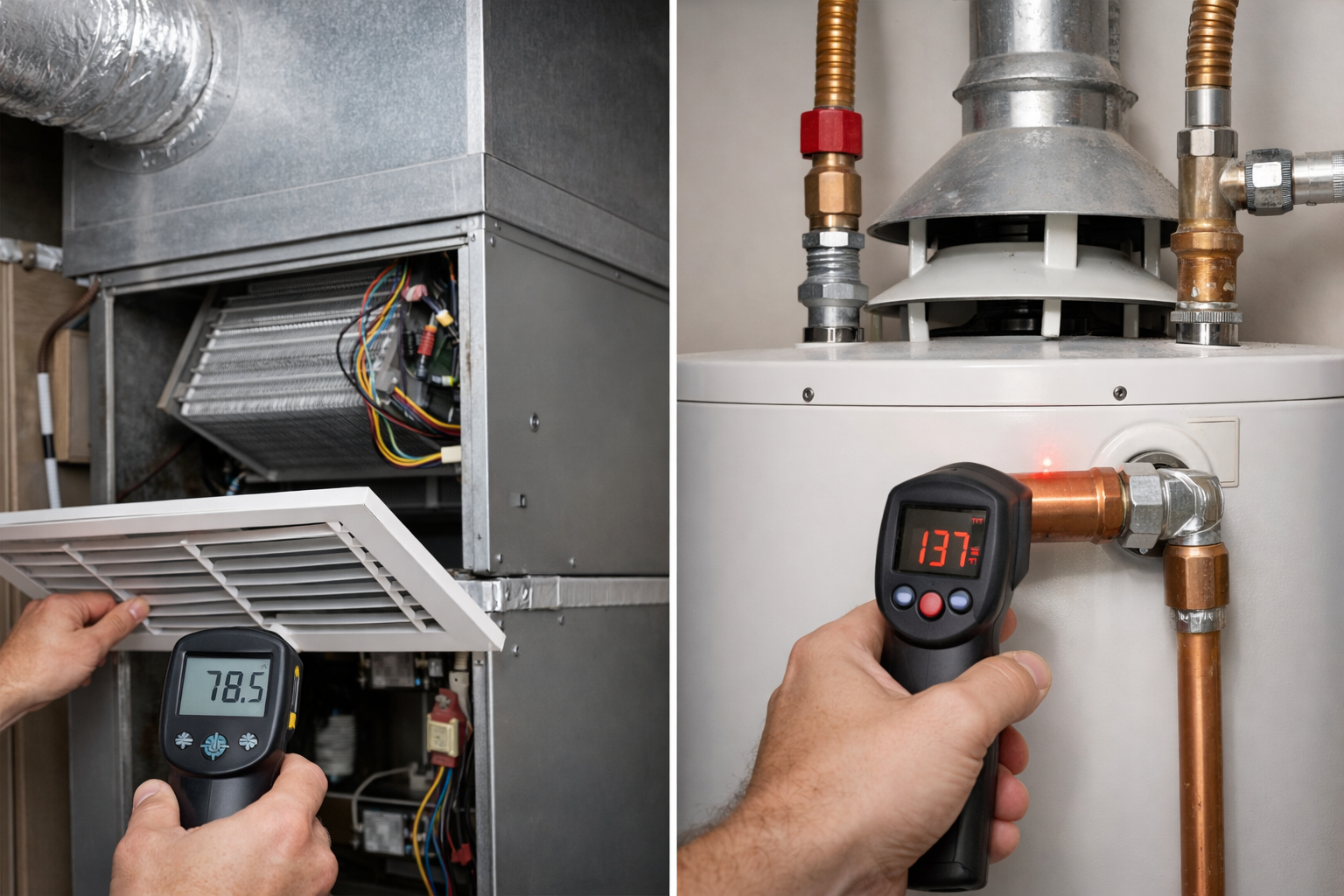
Comfort problems in a home often feel similar at first. A room feels cold, showers feel inconsistent, and people start adjusting thermostats or water heater settings without knowing what system is actually causing the discomfort. The challenge is that airflow and hot-water delivery problems can overlap in the same season, especially in homes with mixed equipment, such as forced-air heating plus a separate water heater, or in homes with hydronic coils, recirculation loops, and multiple bathrooms. The good news is that each type of problem leaves different clues. Airflow issues tend to show up as uneven room temperatures, weak supply vents, noisy returns, and slow recovery after the thermostat calls for heating or cooling. Hot-water delivery issues show up as short showers, temperature swings, long waits at fixtures, and changes that track with the number of faucets in use. With a few targeted observations and simple checks, you can tell which system needs attention before spending money on the wrong fix.
Quick ways to separate the causes
-
Look at Where the Discomfort Happens and How It Moves
Start by identifying whether the discomfort is room-based or fixture-based. If one bedroom stays cold while the rest of the home is fine, that points toward airflow distribution, duct leakage, an imbalanced return path, or a closed damper. Airflow issues often follow the floor plan, meaning certain corners, upper floors, or rooms far from the air handler experience the problem more than rooms near the center. You may notice that the room never catches up, or it warms only when doors are open, which suggests the return air pathway is restricted. In contrast, hot-water delivery problems follow plumbing routes, so you see issues at specific sinks or showers that are far from the water heater, on certain floors, or on one side of the house. The room air may be fine, but the shower becomes lukewarm quickly or takes too long to reach a comfortable temperature. Another clue is movement over time. Airflow problems often fluctuate with outdoor conditions, solar gain, or HVAC runtime. Hot-water delivery problems fluctuate with usage patterns, such as morning demand when multiple showers and laundry loads happen close together. Mapping the discomfort to either rooms or fixtures is the first step toward narrowing the system.
- Use Simple Tests That Create Clear Clues
You can learn a lot with a few controlled tests that do not require tools. For airflow, pick the problem room and compare it to a normal room. Turn the HVAC fan to ON for a short period and check whether airflow from supply vents feels consistently strong. If airflow is weak, hold a tissue near a return grille and see if it pulls noticeably. Then check whether closing the door changes the airflow or temperature, which suggests a pressure imbalance. For hot water, run only one shower and time how long it takes to reach a comfortable temperature; then note how long it stays at that temperature. Next, run a second hot-water fixture elsewhere, such as a sink or the laundry, and see whether the shower temperature drops quickly. If the shower cools as soon as another fixture draws hot water, you may be seeing a capacity issue, a dip tube problem, a mixing valve issue, or a pressure balance problem at the shower valve. If you are comparing options for HVAC Service in Braintree, it helps to collect these observations first because the pattern of results often tells a technician whether to look at ducts and returns or at water heater capacity and plumbing distribution. The point is to create repeatable conditions that reveal which system is sensitive to changes.
- Signs That Point Strongly Toward Airflow Problems
Airflow issues have a few signature symptoms that stand out once you know what to watch for. Uneven temperatures between rooms, especially when the system has been running for a while, often indicate duct imbalances or leakage. A room that feels stuffy or stale can also point toward poor air exchange, insufficient return air, or blocked vents. Noise can be a clue, too. Whistling at a vent suggests high velocity through a restricted opening, while a loud return can suggest undersized ducting or an obstructed filter. If the HVAC system runs longer than normal but comfort does not improve, the issue may be airflow, not equipment output. Check for basics like a dirty filter, blocked returns behind furniture, closed dampers, or supply registers accidentally shut. In multi-story homes, stack effect can make upper floors warmer in summer and cooler in winter, and airflow balancing is often needed to address that pattern. Airflow problems also tend to affect humidity control because proper moisture removal depends on correct airflow across the coil. So if the house feels clammy during the cooling season, that could be an airflow or duct issue rather than a water heater issue.
Match the Symptom to the System
Spotting whether a comfort problem is due to airflow or hot-water delivery starts with observing where the discomfort occurs and what triggers it. Room-based temperature variations, weak vents, noisy returns, and changes when doors open indicate airflow distribution and duct or return issues. Fixture-based complaints, such as long waits for hot water, short showers, and temperature swings when other fixtures run, point to hot-water delivery, capacity, or valve control issues. Simple controlled tests, such as comparing vent flow with the fan running or checking shower stability while another hot-water fixture is in use, can provide clear, repeatable clues. Once you separate the systems, fixes become more targeted and less expensive because you avoid adjusting the wrong equipment or replacing parts that were not causing the problem. With careful notes and a logical approach, you can accurately describe the issue and develop the right repair plan, whether that means balancing airflow, improving return paths, upgrading a water heater, or correcting mixing and pressure behavior at the fixtures.