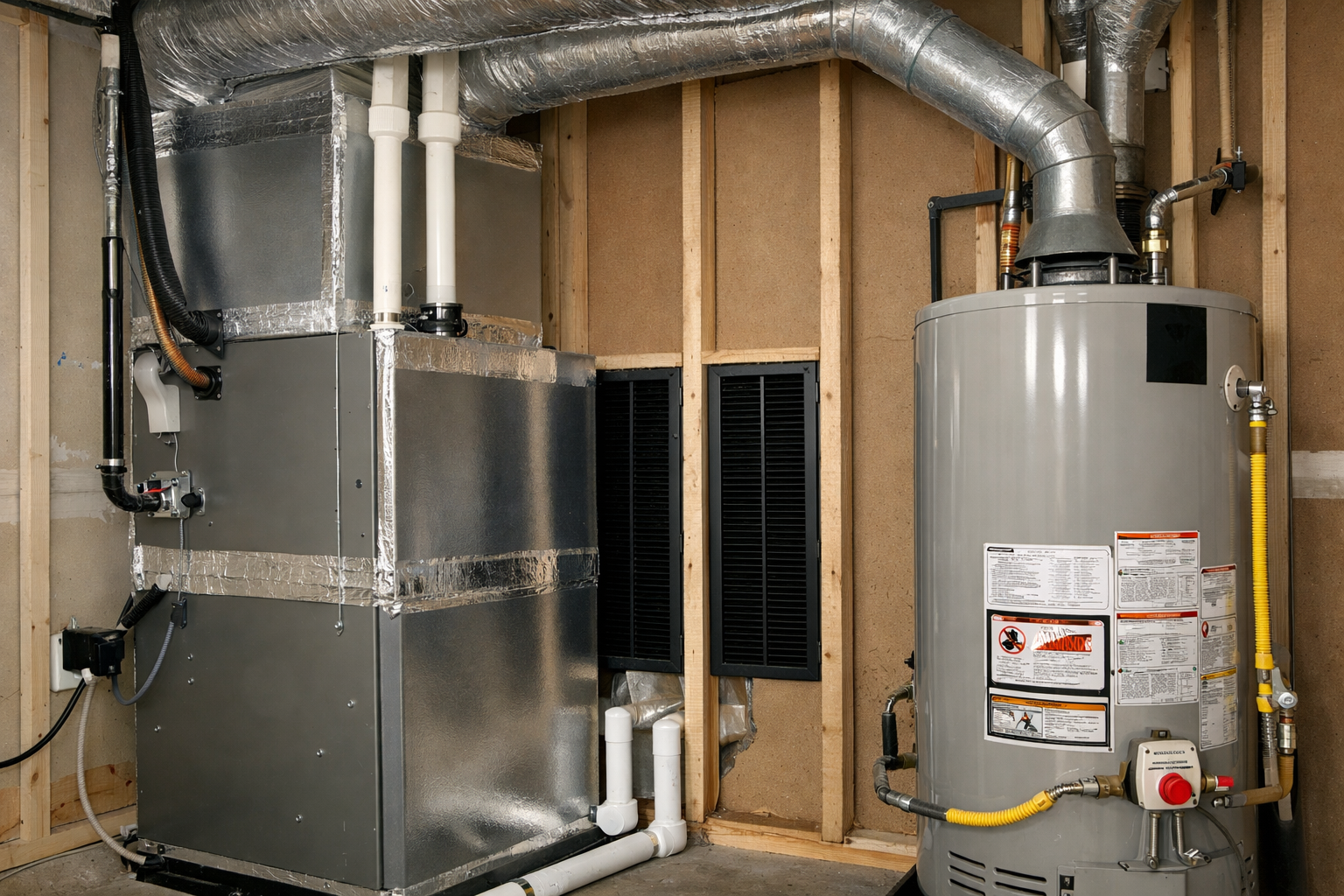
Adding sealed HVAC equipment can feel like it should simplify everything, since sealed-combustion appliances draw air from outdoors and exhaust it outdoors through dedicated piping. In many homes, though, the change affects more than the new unit. Combustion air is tied to pressure balance, venting pathways, and the way the house breathes, especially when older atmospherically vented appliances are still present. A sealed furnace or boiler may reduce one source of indoor air demand, yet it can also expose problems that were masked by leaky construction, oversized exhaust fans, or a water heater that still relies on room air. The goal is to prevent backdrafting, reduce the risk of carbon monoxide, and keep equipment operating as intended. Understanding combustion air requirements helps homeowners and crews decide whether the mechanical room needs added makeup air, whether venting needs updating, and how to verify the final setup through testing rather than assumptions.
Where combustion air still matters
- Sealed combustion changes pressure relationships in the home.
Sealed combustion equipment uses a closed intake and exhaust system, usually with PVC or similar venting, so the burner is isolated from indoor air. That design reduces the risk that the appliance will pull contaminants from the room and limits drafts that can occur with older open-combustion appliances. However, the home still experiences pressure shifts from bath fans, range hoods, clothes dryers, and return air imbalances. If those exhaust forces are strong, they can create negative pressure that pulls air down a chimney or through a vent connector from an older water heater or fireplace. Even if the newly installed furnace is sealed, the house may now be tighter because contractors sealed penetrations, replaced doors, or improved ductwork during the project. That tighter envelope can make existing venting more sensitive to depressurization. It also changes how the mechanical room behaves if it shares air with the rest of the house. This is why combustion air conversations often include the whole building, not just the appliance being added, because pressure dynamics decide whether exhaust flows safely out or spills back in.
- Mixed appliance rooms and why makeup air may still be needed
Many homes end up with a mixed setup for a while, such as a sealed furnace paired with a naturally drafted water heater, or a sealed boiler next to a fireplace that uses room air. In these cases, the room still needs reliable combustion air for the open combustion appliance, even though the new unit does not. The risk is not only that the open appliance might starve for air, but also that it could backdraft under certain conditions, especially when exhaust fans are running or when wind pressure shifts around the house. Crews consider the room volume, the door and louver configuration, and whether the space is considered confined under local code. They may add dedicated combustion-air openings or ducts, or recommend upgrading the remaining open combustion appliances to sealed models, to simplify the system. If comfort complaints show up after the change, such as odors near the water heater, condensation, or unusual draft behavior, it is a clue that air pathways need attention. In some service calls, the issue is noticed during professional AC repair by Price Heating & Air Conditioning because pressure imbalances and venting problems can overlap with performance symptoms that look like simple HVAC faults.
- How crews verify safe operation with testing
Combustion air decisions should not rely only on rules of thumb, because each home has different leakage rates and exhaust loads. A practical verification step is a worst-case depressurization test, in which exhaust fans, dryers, and the air handler are operated in combinations to achieve the lowest negative pressure. Technicians then check drafts and spillage around appliances that rely on indoor air. They may use smoke pencils at draft hoods, measure pressure with manometers, and verify that vent connectors are rising properly and staying warm enough to draft. Combustion analyzers can confirm proper burner operation and help reveal whether an appliance is struggling for air or producing higher carbon monoxide levels under certain conditions. For sealed combustion equipment, technicians also verify intake and exhaust routing, termination clearances, and, if applicable, condensate drainage. Even though sealed equipment is less sensitive to room air, it can still be affected by blocked intakes, recirculated exhaust at the termination, or improper piping lengths. Testing creates confidence that the new sealed system did not unintentionally destabilize other appliances or the home’s pressure balance.
Key Safety Checks Built In
Combustion air requirements still matter when sealed HVAC equipment is added because the home’s pressure balance and any remaining open combustion appliances can create safety risks if air pathways are not understood. Sealed combustion units reduce indoor air dependence, yet stronger exhaust fans, tighter building envelopes, and mixed-appliance rooms can increase the risk of backdrafting at water heaters or fireplaces that rely on room air. The most reliable approach is to evaluate the whole house, identify which appliances still need indoor combustion air, and confirm performance using worst-case depressurization and draft testing. When problems arise, solutions often include upgrading remaining open-combustion appliances, improving duct sealing and airflow balance, and adding controlled, dedicated combustion or makeup air. By pairing thoughtful design with testing, homeowners can gain the efficiency and comfort benefits of sealed equipment while protecting indoor air quality and ensuring that venting remains stable under real-world living conditions.