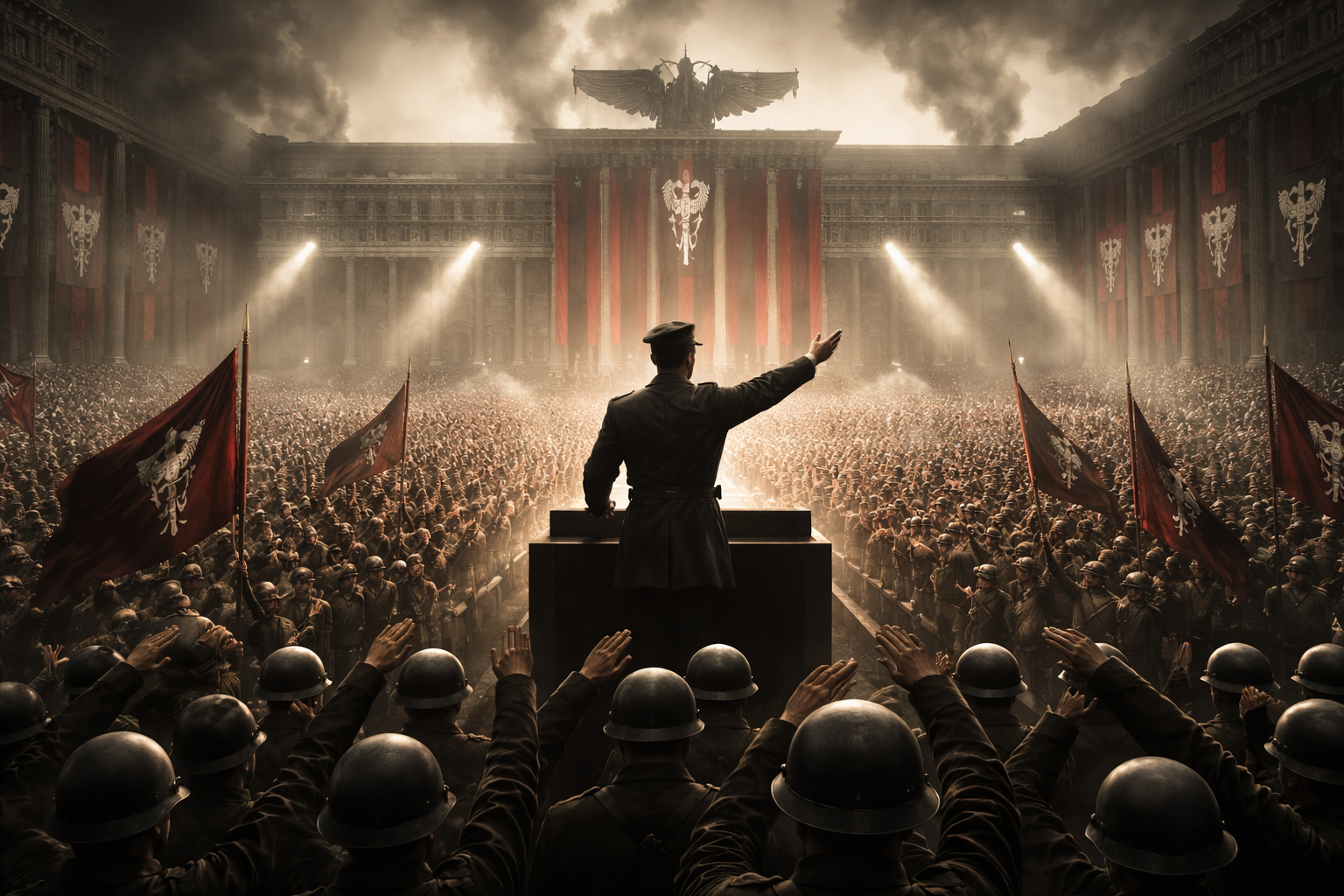
The term fascisterne refers to followers or supporters of fascism, a political ideology that emerged in Europe during the early twentieth century and reshaped global politics in profound ways. Although the word itself comes from Scandinavian languages and simply means “the fascists,” the concept behind fascisterne carries deep historical, political, and social meaning. Fascism developed during a time of widespread instability after World War I, when many nations were struggling with economic hardship, social unrest, and political uncertainty. In that environment, movements promising strong leadership, national unity, and political order began to gain attention and support among populations searching for stability and direction.
Understanding fascisterne requires examining the historical context in which fascism developed and the beliefs that defined those who supported it. Fascist movements were built on ideas that rejected liberal democracy and emphasized the authority of the state, strict national identity, and powerful leadership. These movements spread across several countries and influenced political developments that ultimately contributed to major global conflicts and long-lasting changes in international politics. The study of fascisterne today remains important because it helps explain how certain political systems rise, how they operate, and how societies respond to them.
Historical Origins of Fascisterne
The roots of fascisterne can be traced to the aftermath of World War I, a period when many European societies faced economic collapse, unemployment, and social fragmentation. Large numbers of people felt disillusioned with traditional democratic institutions that seemed unable to address the crises affecting their nations. In this atmosphere of uncertainty, political movements promising national revival and strong leadership gained increasing appeal. Fascism emerged as one of these movements, presenting itself as a solution to political instability and national decline.
Italy became the birthplace of the first fascist movement under the leadership of Benito Mussolini. Mussolini built his political support by appealing to nationalism and by presenting himself as a leader capable of restoring Italy’s strength and unity. His movement attracted followers who believed that the country required a powerful centralized authority rather than a fragmented democratic system. As Mussolini consolidated power, the ideology of fascism began to spread beyond Italy’s borders, inspiring groups and political parties in other parts of Europe.
Germany soon experienced its own version of fascist influence through the rise of the Nazi movement. While Nazism had distinct characteristics, it shared several ideological similarities with fascism, including authoritarian leadership, extreme nationalism, and rejection of democratic governance. These developments contributed to a broader European environment in which fascisterne became a visible political force. Supporters of fascist ideologies believed that strong leadership and national unity were necessary to overcome the challenges facing their societies.
Ideological Foundations of Fascisterne
The beliefs held by fascisterne were rooted in several key ideological principles that defined fascist movements across different countries. Although specific policies varied from one regime to another, the underlying philosophy shared common themes related to authority, nationalism, and political organization. These principles shaped how fascist governments functioned and how they sought to influence society.
One central idea behind fascisterne was the importance of a powerful leader who represented the will of the nation. Fascist ideology emphasized the role of a single authority figure capable of guiding the country through crises and maintaining national unity. This approach rejected the idea of shared political power and democratic debate, instead promoting the belief that decisive leadership was essential for national survival and progress. Supporters of fascism often viewed strong leadership as a symbol of stability and strength during periods of uncertainty.
Another important element was the focus on intense nationalism. Fascisterne believed that the nation should be unified under a shared cultural identity and collective purpose. This sense of national pride was reinforced through public ceremonies, propaganda campaigns, and education systems that emphasized loyalty to the state. National unity was portrayed as essential to the success of the country, and citizens were encouraged to place the interests of the nation above individual freedoms or political disagreements.
Fascist ideology also rejected many aspects of liberal democracy, including political pluralism and the protection of individual rights. Supporters argued that democratic systems were too slow and divided to respond effectively to national challenges. In contrast, fascist governance aimed to create a society in which political opposition was minimized and the state held a dominant role in shaping economic, cultural, and social life.
The Expansion of Fascisterne Across Europe
During the interwar period between World War I and World War II, fascisterne gained influence in several European countries. Fascist movements were particularly successful in environments where economic crises and political instability weakened public trust in democratic institutions. These conditions allowed authoritarian leaders to present themselves as alternatives to existing political systems.
Italy’s fascist government became the first fully established fascist regime and served as a model for other movements across Europe. Mussolini’s administration reorganized the political system to concentrate power in the hands of the state and eliminate opposition parties. Through propaganda and mass political rallies, the government promoted a narrative of national strength and unity designed to inspire loyalty among citizens.
Germany’s political transformation under Adolf Hitler marked another major expansion of fascist ideology. The Nazi regime combined elements of fascism with racial ideology and aggressive expansionist policies. While Nazism differed in some respects from Italian fascism, both movements shared the core belief that authoritarian leadership and national unity were necessary for national revival.
Other countries also experienced fascist or fascist-influenced movements during this period. Spain, Hungary, and Romania witnessed political groups that adopted similar ideological frameworks, although each movement reflected the unique political and cultural conditions of its country. These developments demonstrate how fascisterne became part of a broader political trend during the turbulent decades between the two world wars.
Social Influence and Propaganda
The influence of fascisterne extended far beyond political institutions. Fascist regimes sought to reshape society by influencing culture, education, and everyday life. Governments used propaganda as a powerful tool to spread ideological messages and strengthen loyalty to the state. Through newspapers, radio broadcasts, posters, and public speeches, fascist leaders promoted narratives of national pride, unity, and strength.
Education systems played an important role in reinforcing fascist values. Schools often incorporated lessons emphasizing patriotism and loyalty to the government. Youth organizations were established to encourage younger generations to adopt the ideals promoted by fascist leadership. These programs were designed not only to educate but also to cultivate a strong emotional connection between citizens and the state.
Cultural activities also reflected the ideological goals of fascisterne. Art, architecture, and public ceremonies frequently celebrated national identity and military strength. Governments organized large rallies and national celebrations that showcased the power and unity of the nation. These events created a sense of belonging among supporters while reinforcing the authority of the ruling regime.
Economic and Political Structures
Fascist governments introduced economic systems intended to align national productivity with the interests of the state. Rather than adopting purely capitalist or socialist economic models, fascist regimes often promoted a system sometimes described as corporatism. In this approach, industries, labor organizations, and government institutions were organized into groups that worked together under state supervision.
The goal of this system was to reduce conflict between workers and employers while ensuring that economic activity supported national objectives. In practice, however, these structures often limited workers’ rights and concentrated economic power within state-controlled institutions. Independent labor unions were typically replaced with organizations aligned with the government, and economic decisions were heavily influenced by political priorities.
Politically, fascisterne supported systems in which opposition parties were either restricted or eliminated entirely. Governments controlled many aspects of public life, including the media and cultural institutions. By reducing political competition and limiting dissent, fascist regimes aimed to create a unified society focused on national goals rather than political disagreement.
Fascisterne in Scandinavian Contexts
Although fascism is most commonly associated with countries such as Italy and Germany, smaller fascist movements also appeared in parts of Scandinavia during the 1930s. These movements adopted elements of fascist ideology while adapting them to local political traditions and cultural conditions. In Denmark and Norway, some nationalist groups expressed admiration for authoritarian leadership and promoted political programs inspired by fascist models elsewhere in Europe.
Despite these influences, fascisterne in Scandinavian countries never gained the same level of political power as their counterparts in southern and central Europe. Democratic institutions remained relatively stable, and public resistance to authoritarian governance limited the growth of fascist movements. Nevertheless, the existence of these groups demonstrates how the ideas associated with fascisterne spread across national boundaries during periods of political uncertainty.
The Legacy of Fascisterne
The historical legacy of fascisterne continues to shape political discussions and historical scholarship today. The rise of fascist movements demonstrated how economic hardship, social instability, and political polarization can create conditions that allow authoritarian ideologies to gain traction. The consequences of fascist rule during the twentieth century had profound global effects, influencing international relations, shaping military conflicts, and altering political systems in many parts of the world.
Historians and political scholars study fascisterne not only to understand the past but also to identify warning signs that may appear in modern political environments. The study of fascist movements highlights the importance of protecting democratic institutions, maintaining political transparency, and encouraging open dialogue within societies. These lessons remain relevant as nations continue to navigate complex political challenges in the modern era.
Conclusion
The concept of fascisterne represents a significant chapter in modern political history. It refers to individuals and movements that supported fascism, an ideology characterized by authoritarian leadership, strong nationalism, and the suppression of political opposition. Emerging during a period of widespread crisis in the early twentieth century, fascist movements attracted followers who believed that centralized power and national unity could restore stability and strength to their countries.
Examining the history and ideology associated with fascisterne reveals how powerful political narratives can shape societies and influence global events. The rise of fascist regimes demonstrates both the appeal of strong leadership during times of uncertainty and the dangers of concentrating power in the hands of a single authority. By studying this history, societies gain valuable insight into the importance of democratic governance, civil liberties, and political accountability. Understanding fascisterne ultimately helps ensure that the lessons of the past remain relevant in protecting the future of democratic institutions around the world.
Read also: Chandler Powerball Million Winner