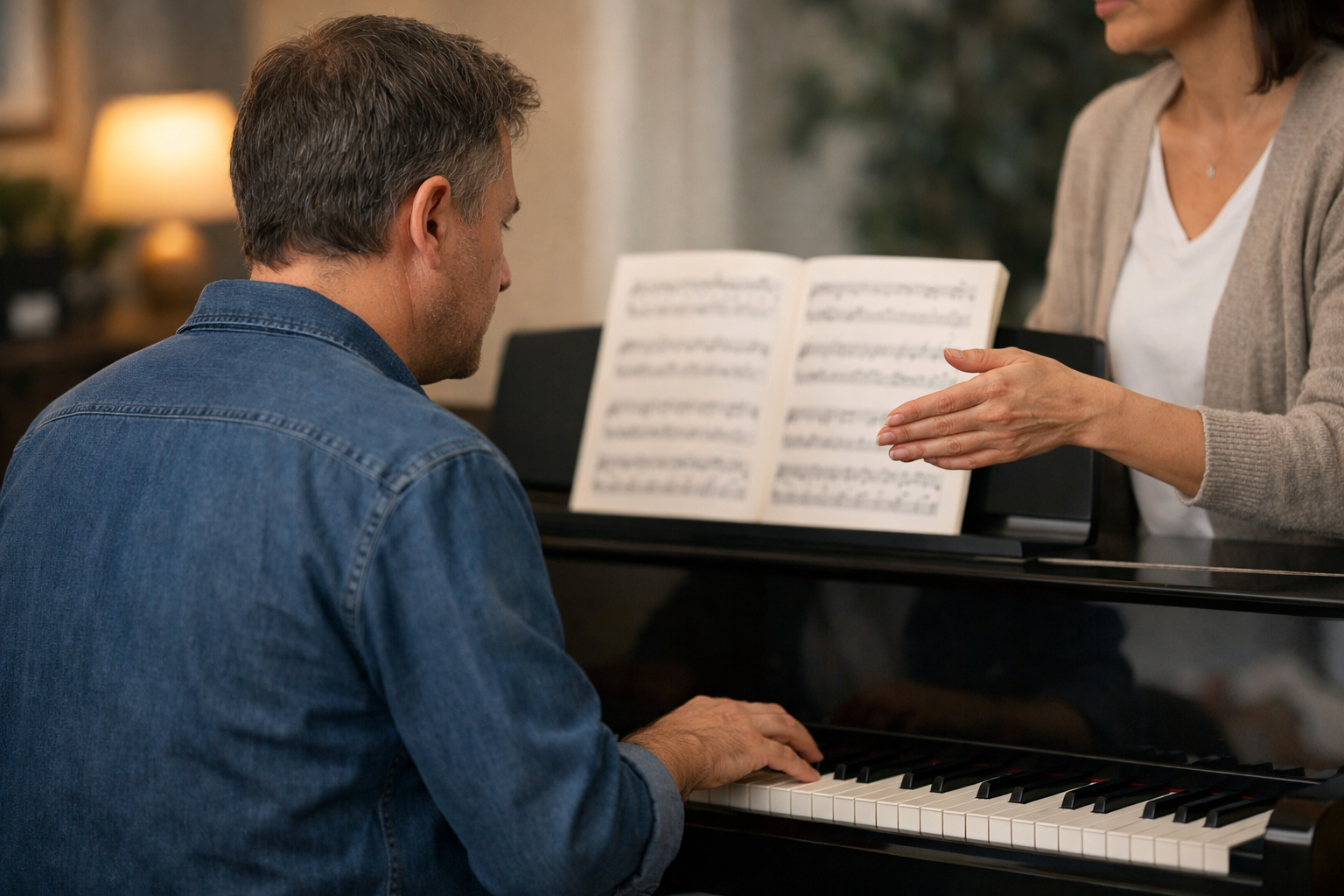
Starting piano as an adult can feel intimidating because adults tend to compare themselves to people who began in childhood. Many carry the quiet belief that musical ability has an expiration date, and that belief can create hesitation before the first lesson even happens. The truth is that adults often bring strengths that children do not. Adults can set goals, notice patterns, reflect on what is not working, and practice with intention when they have a plan. The fear usually comes from two places: worry about sounding bad and worry about wasting time. Both fears shrink when you replace vague expectations with a clear process. Learning piano is not about proving talent. It is about building coordination, reading, rhythm, and listening in small steps. When you approach lessons as a skill-building path rather than a performance test, starting late becomes less of a problem and more of a personal choice you finally get to make.
Confidence before speed
- Reframe Starting Late as a Practical Advantage
Adults often think they must catch up, but catching up is not the point. Piano is not a race and there is no finish line where everyone plays the same pieces. When you start as an adult, you can choose what matters to you. Some adults want to play pop chords to sing with friends, others want to read classical music, and others want a calming practice after work. That clarity helps you avoid months of exercises that feel disconnected from your goals. Another advantage is that adults can understand why technique matters. A child may accept posture rules without question, but an adult can connect posture to reduced tension, smoother playing, and fewer mistakes. Adults also have better self-awareness. They can notice when their shoulders rise, when their wrists lock, or when they rush rhythms, and they can correct those habits faster once they learn what to watch for. Starting late becomes less scary when you see progress as small wins, like playing a simple melody smoothly or keeping a steady beat for two minutes without stopping. Those wins add up, and they happen faster when lessons are structured around real-life goals and realistic practice time.
- Choose a Lesson Setup That Reduces Anxiety
Fear decreases when the learning environment feels supportive and predictable. Begin with a clear plan: what you will practice, how long it will take, and what progress looks like in the first month. Ask for a lesson format that includes short exercises, a simple piece, and a repeatable practice routine rather than a vague expectation to practice more. It also helps to choose music you actually like, because enjoyment lowers resistance. If you are looking for lesson options and want a sense of how a program is presented, https://www.playtimemusicacademyofgreaterbaltimore.com/ is a reference some adults use when exploring lesson structures and scheduling. Another anxiety reducer is making the first goal small and specific. Instead of saying I want to play piano, aim for I want to play a short melody with both hands at a slow steady tempo. When the goal is concrete, you can measure progress without emotional guessing. Also consider lesson frequency. Weekly lessons with short daily practice often work better than long practice sessions that happen only when guilt builds up.
- Build Practice Habits That Feel Manageable
Adults often quit not because they cannot learn, but because practice feels unstructured and time-consuming. A simple routine prevents that. Start with five minutes of warm-up, five minutes of rhythm and coordination, and five minutes of a piece. Fifteen focused minutes done consistently is more valuable than one long session followed by several missed days. Use a timer and stop when time is up to avoid turning practice into a punishment. Another helpful habit is practicing slowly on purpose. Adults sometimes rush because they want it to sound like real music immediately, but speed creates mistakes and tension. Slow practice creates control, and control creates confidence. Keep the practice goal small, like repeating one measure until it feels easy rather than restarting from the beginning every time you make a mistake. If reading notes feels overwhelming, focus on landmark notes and simple patterns first, then add more notes gradually. Recording yourself once a week can also help because it shows progress you may not feel day to day. The point is to create a practice routine that fits a real adult schedule and still produces visible improvement.
Starting Late Can Still Be Meaningful
Adult beginner piano lessons become less intimidating when you treat learning as a process rather than a test of talent. Starting late does not remove your ability to build rhythm, coordination, reading, and musical expression. It simply changes the timeline and the reasons you are learning. When you choose a supportive lesson setup, set small clear milestones, and practice in short consistent sessions, progress becomes predictable. Perfectionism fades as you collect real evidence of improvement: steadier tempo, smoother hand coordination, and pieces you can play with confidence at your pace. Over time, the fear of starting late is replaced by something more practical, a routine that feels enjoyable and personal, and a skill that grows because you kept showing up.