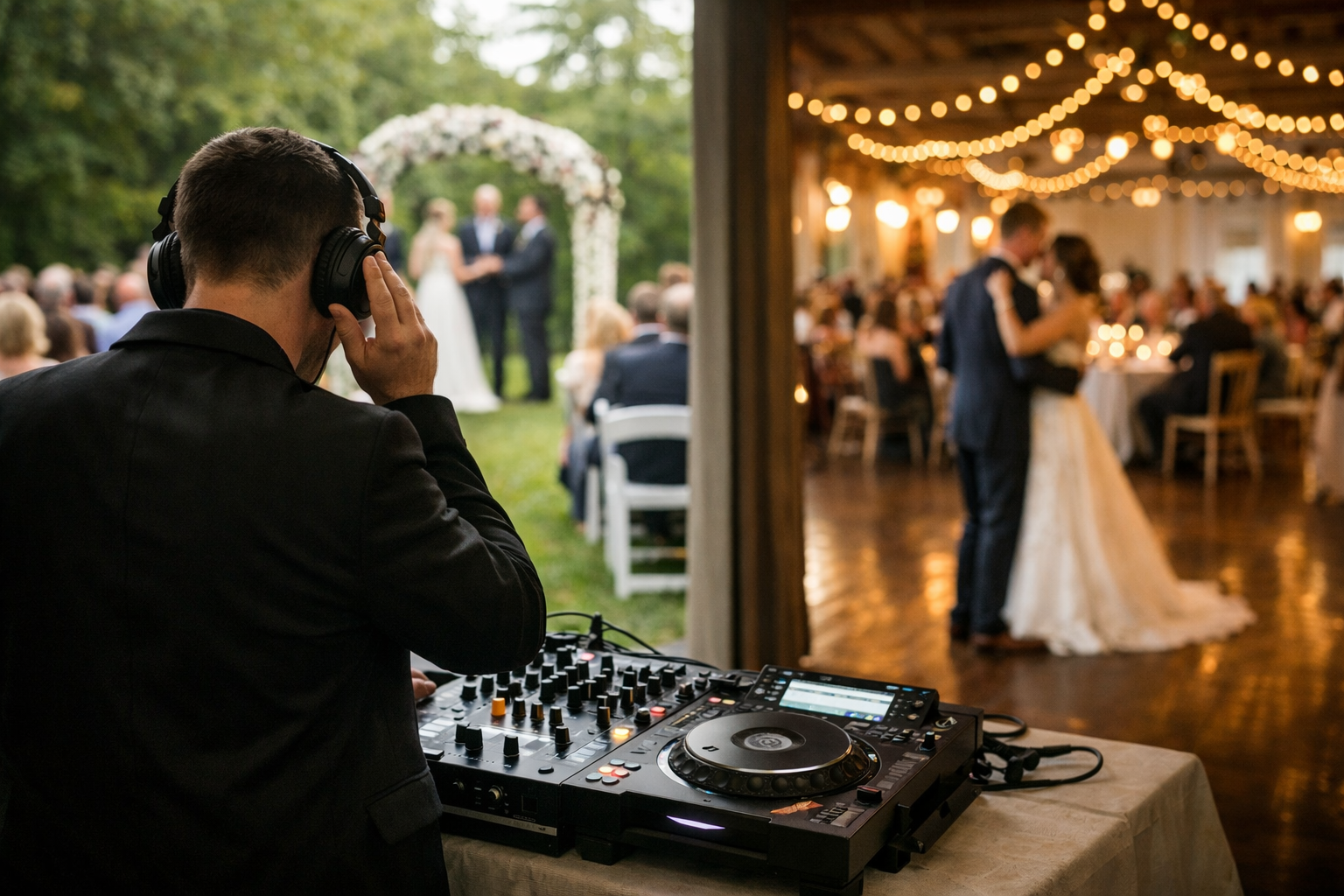
A wedding can have great music and still feel disjointed. The gap usually appears between the ceremony and reception, when timing slips, vendors lose sync, and guests are left waiting without clear direction.
That transition window is where a wedding DJ proves real operational value. For venue managers, property teams, and event-facing building owners, a strong DJ is not just a music provider; they are a partner. They are a timing coordinator, communication bridge, and energy manager who helps the event move cleanly from one phase to the next. Seamless transitions do not happen because playlists are good. They happen because the DJ plans logistics, reads timing pressure, and coordinates with the room, staff, and vendor team in real time.
Seamless Flow Starts Before Guests Arrive
- Transition Success Starts Before Guests Arrive
Smooth ceremony-to-reception flow is usually built during pre-event planning, not during the wedding itself. DJs who handle transitions well gather detailed timing information in advance, including ceremony length, family photo plans, cocktail hour setup, grand entrance sequencing, and venue movement paths. They are not only asking what songs the couple wants. They are building a transition map.
This planning matters because the ceremony and reception often require different sound needs, locations, and staffing rhythms. If timing assumptions are vague, even a well-run venue can experience delays. DJs who define key cues in advance reduce uncertainty for everyone. They know when music needs to stop, when ambient coverage should begin, and when announcements should guide guests from one area to the next.
- Vendor Communication Keeps The Timeline Intact
The strongest wedding DJs operate as part of a vendor team, not as an isolated entertainment service. They coordinate closely with planners, photographers, videographers, catering staff, and venue coordinators to maintain the timeline during the transition period. Ceremony end time affects family portraits, photo timing affects cocktail pacing, and catering readiness affects when reception formalities should begin.
This is why experienced teams, including a well-organized Milwaukee Wedding DJ Company, usually build communication checkpoints into the event plan rather than relying on last-minute assumptions. A DJ who confirms timing with the planner and venue lead before the ceremony starts is far more likely to keep the transition smooth than one waiting for someone to wave from across the room. Coordination prevents silence, crowd confusion, and rushed announcements.
- Separate Sound Zones Need Intentional Planning
Many wedding transitions become messy because the ceremony and reception spaces require different audio setups. Outdoor ceremonies may use one speaker arrangement and microphone plan, while the reception room needs a full separate system with dance floor coverage, speech microphones, and background music zones. If this is not carefully planned, the handoff can cause delays or dead air.
DJs who manage this well prepare for the venue’s physical reality. They assess distances, power access, setup timing windows, and whether equipment needs to be moved between spaces or duplicated. In some venues, the cleanest solution is a ceremony setup that can remain in place while a separate reception system is already live-tested. In others, a coordinated breakdown-and-reset plan is necessary. The point is not equipment volume. It is transition reliability.
- Ceremony Audio Timing Requires Precision
The end of the ceremony is one of the most important handoff moments of the day. Recessional music, microphone mute timing, and guest dismissal cues all shape how naturally the event moves into the next phase. If the audio lingers too long, cuts too abruptly, or conflicts with officiant instructions, the transition loses momentum immediately.
A DJ handling this professionally watches for real-time cues rather than relying solely on a printed timeline. Ceremonies often run a few minutes early or late. Vows may pause, readings may extend, and processional spacing may shift. DJs who stay locked in can adjust music starts and stops cleanly, keeping the ceremony ending polished while giving planners and venue staff the timing clarity they need for guest movement and post-ceremony setup.
- Guest Guidance Is Part Of The Job
Guests move smoothly when they know what happens next. They stall when the event loses direction. One of the most practical roles a wedding DJ plays in ceremony-to-reception transitions is guiding people with clear announcements and well-timed background audio that supports movement without creating confusion.
This communication has to be concise and confident. Guests do not need long explanations. They need simple direction on where the cocktail hour is, whether the couple is taking photos, and when the reception doors will open. DJs who phrase these updates clearly reduce crowd bottlenecks, minimize repeated questions to venue staff, and help the event maintain a composed feel. In operational terms, that communication supports both guest experience and venue efficiency.
- Music Energy Must Shift Gradually
A seamless transition is not just about logistics. It is also about energy management. The emotional tone after a ceremony is different from that of an open dance floor, and strong DJs use music to bridge the gap. They choose transitional music that supports conversation, movement, and anticipation rather than jumping too quickly into high-energy reception tracks.
This is a subtle skill with visible results. Guests should feel the event progressing, not abruptly switching modes. During cocktail hour or room reset periods, music often carries the atmosphere while other vendors complete their work. A DJ who reads the room well keeps the energy elevated enough to avoid a lull while leaving space for conversation, photography, and service flow. That balance helps the reception start with momentum rather than a restart.
Seamless Transitions Come From Coordination Discipline
Ceremony-to-reception transitions are where wedding timing either tightens up or falls apart. Strong DJs keep that handoff smooth by planning early, coordinating vendors, preparing audio zones, guiding guests clearly, and adjusting to real-time conditions without losing control of the event flow.
For venue operators and event-facing properties, that reliability matters as much as the music itself. A DJ who manages transitions well supports guest experience, reduces pressure on staff, and helps the entire event feel professionally run from one phase to the next. The result is not just a better party. It is a stronger event operation, where timing, communication, and atmosphere work together rather than compete for attention.