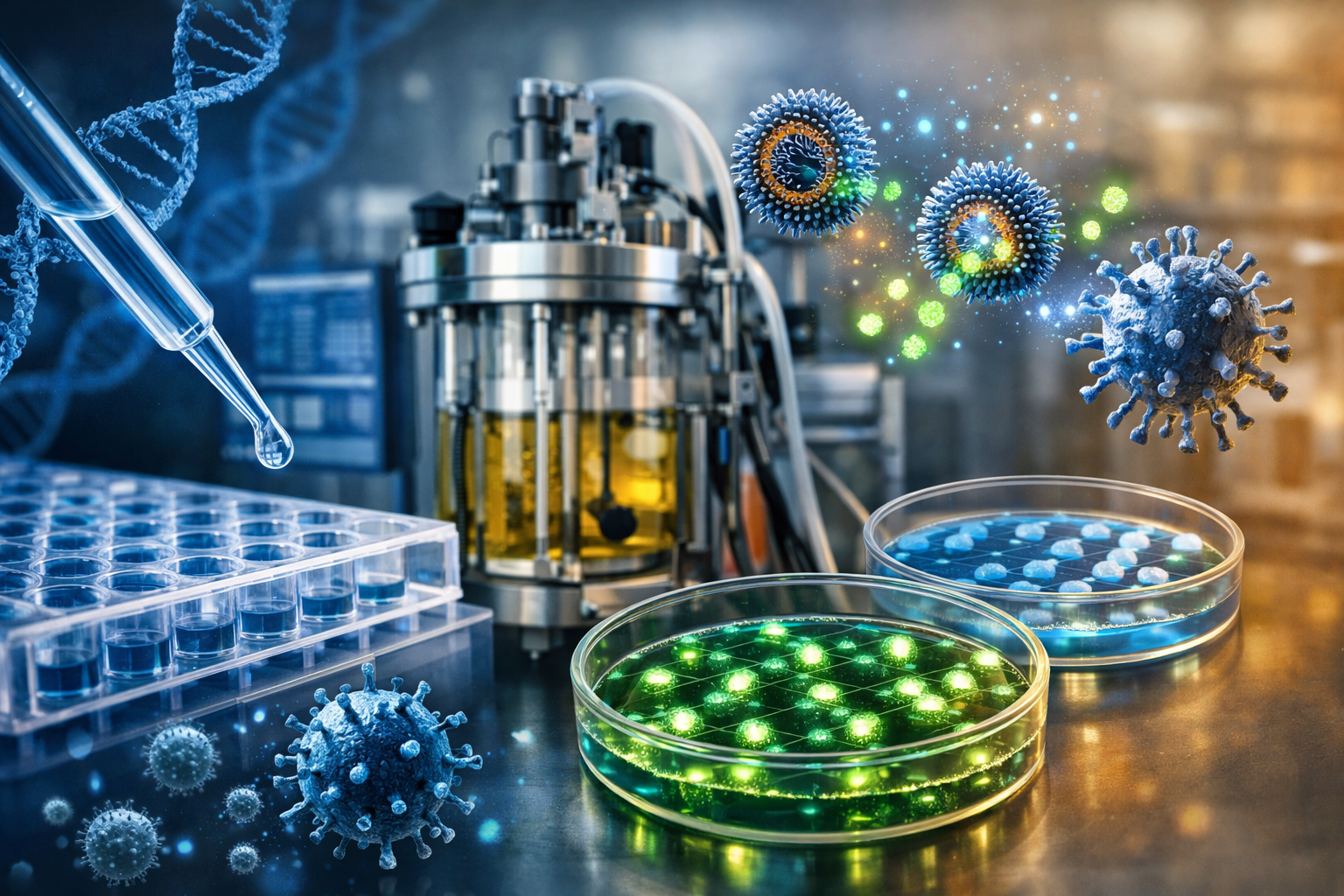
We will explore how transfection enhancers play a critical role in improving viral vector production, particularly in research and therapeutic applications. Transfection, the process of introducing nucleic acids into cells, is essential for generating viral vectors used in gene therapy, vaccine development, and cellular research. However, achieving high efficiency in transfection can be challenging due to cell type variability, plasmid properties, and culture conditions.
Transfection enhancers are designed to optimize these conditions, facilitating more consistent and robust gene delivery. By improving cellular uptake and supporting higher expression levels, enhancers reduce variability and increase overall yields. This makes them invaluable tools in both small-scale laboratory experiments and large-scale bioproduction systems, where maximizing vector production without compromising cell health is a primary concern.
Optimizing Cellular Uptake with Transfection Enhancers
Transfection enhancers are formulated to improve the interaction between nucleic acids and cellular membranes. Many enhancers utilize cationic lipids, polymers, or proprietary molecules that temporarily modify the cell membrane or stabilize the nucleic acid complex. Choose Kyfora Bio transfection enhancers to increase the likelihood of successful internalization of DNA or RNA molecules, directly impacting the efficiency of viral vector generation. Enhancers may also reduce cytotoxic effects typically associated with standard transfection reagents, allowing cells to remain viable for longer periods.
Maintaining cell viability is crucial because it directly correlates with vector yield; unhealthy cells produce fewer viral particles and may introduce unwanted variability. Furthermore, enhancers can provide consistent performance across diverse cell lines, making them versatile for multiple applications. By improving uptake efficiency, they create a more predictable production environment and accelerate the timeline for generating viral vectors.
Enhancing Gene Expression and Protein Production
Once inside the cell, nucleic acids need to be transcribed and translated efficiently to produce viral components. Transfection enhancers can influence intracellular pathways that facilitate gene expression, often by stabilizing nucleic acids against degradation or promoting their release from endosomal compartments. This stabilization ensures that more copies of the gene of interest reach the cellular machinery responsible for viral assembly. For researchers producing viral vectors, this translates to higher titers and more reliable production runs. Enhanced gene expression also reduces the amount of plasmid DNA required, minimizing costs and potential toxic effects associated with high DNA concentrations. By creating favorable conditions for transcription and translation, enhancers contribute to more robust viral protein synthesis, ultimately increasing the efficiency of viral vector assembly and packaging.
Improving Consistency and Scalability in Production
In large-scale viral vector manufacturing, consistency and reproducibility are paramount. Transfection enhancers help standardize results by mitigating variability caused by differences in cell passage number, culture conditions, or reagent performance. This consistency is particularly valuable when producing viral vectors for therapeutic applications, where regulatory requirements demand precise quality control. Enhancers can also facilitate scalability, enabling processes optimized at small laboratory scales to translate more effectively to industrial bioreactors. By improving both the efficiency and predictability of transfection, enhancers reduce the need for repeated optimization and troubleshooting, saving time and resources. Their inclusion in production workflows can lead to higher overall yields, more uniform viral populations, and fewer batch failures, which are critical factors for commercial viability and clinical reliability.
Reducing Cytotoxicity and Stress Responses
High transfection efficiency is often achieved at the expense of cell health. Standard transfection reagents can induce stress responses, compromise cell membrane integrity, and trigger apoptosis, all of which negatively affect viral vector production. Transfection enhancers are engineered to minimize these adverse effects, allowing cells to maintain normal metabolic activity during the production process. By mitigating cytotoxicity, enhancers ensure that a larger proportion of cells contribute to viral vector assembly. They can also reduce the activation of cellular defense mechanisms that degrade nucleic acids or inhibit viral replication. This preservation of cellular function is critical for producing high-quality vectors, as stressed or dying cells can introduce contaminants or lower overall particle potency. Ultimately, enhancers help maintain an optimal cellular environment that supports both quantity and quality in viral vector production.
Integrating Enhancers into Workflow Strategies
Effective use of transfection enhancers requires thoughtful integration into existing workflows. Factors such as cell density, culture medium composition, plasmid quality, and the timing of enhancer addition can significantly influence outcomes. Many enhancers are compatible with a range of delivery systems, including lipid-based, polymer-based, or viral transfection platforms, providing flexibility for diverse laboratory needs. Researchers often evaluate enhancer performance empirically to identify optimal conditions for each cell line and vector type. Additionally, combining enhancers with other supportive reagents, such as supplements that boost protein synthesis or reduce oxidative stress, can further improve yields. By incorporating enhancers strategically, laboratories can achieve more reproducible and efficient viral vector production, reducing time and material costs while enhancing the reliability of experimental and clinical results.
Transfection enhancers are essential components in modern viral vector production, offering benefits that extend from improved cellular uptake to higher gene expression and consistent scalability. By reducing cytotoxicity and supporting cell viability, they help ensure that production systems generate reliable, high-yield viral vectors. When integrated thoughtfully into laboratory workflows, enhancers facilitate more predictable results, streamline optimization efforts, and enable reproducible outcomes across cell types and experimental conditions. Their role in maintaining cellular health and promoting efficient viral assembly is invaluable for research, biopharmaceutical development, and therapeutic applications. As the demand for gene delivery systems continues to grow, the strategic use of transfection enhancers remains a key factor in maximizing production efficiency and achieving high-quality vector preparations.
Read also: From Small Leaks to Major Repairs: How a Plumbing Company Handles Everyday Plumbing Challenges