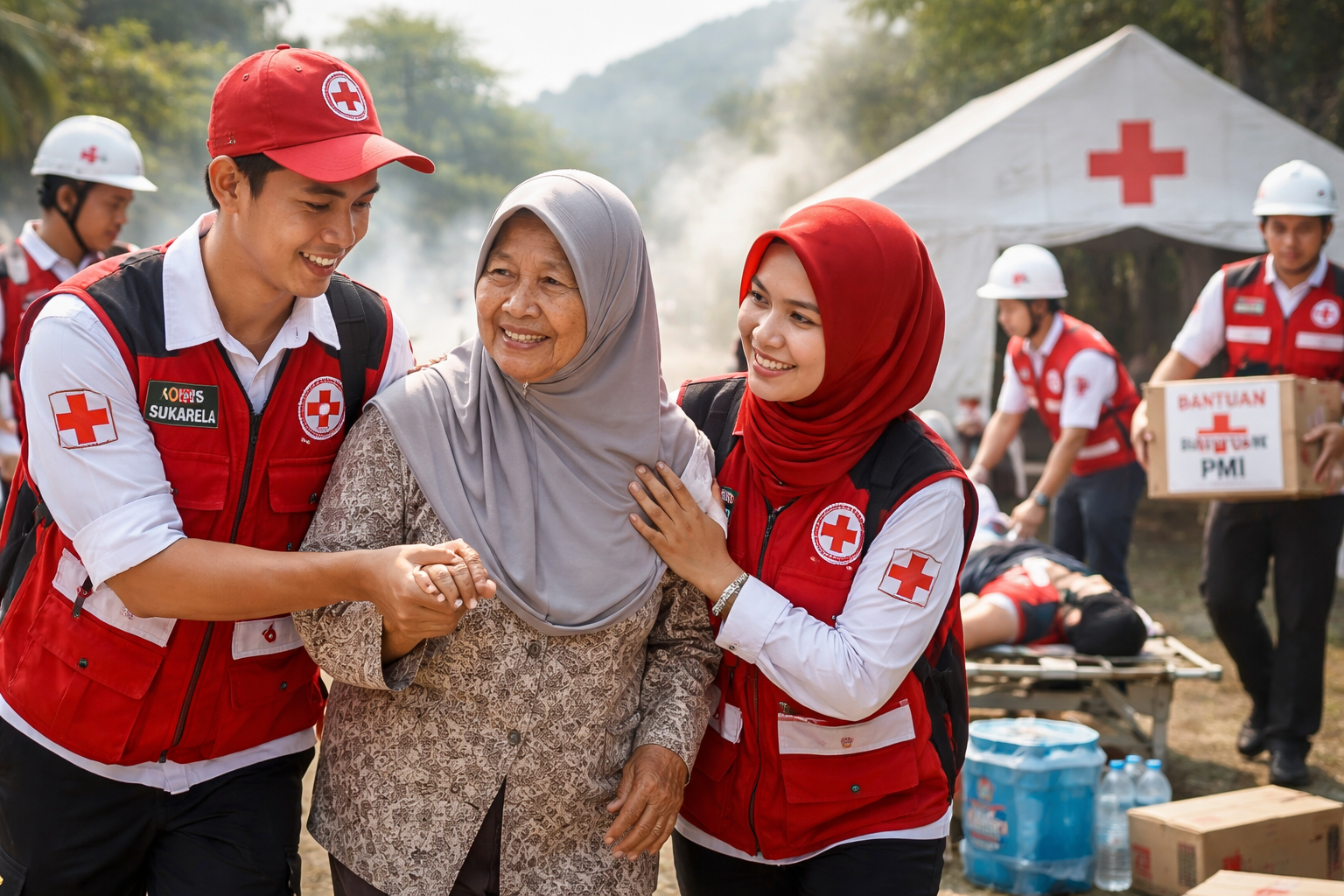
Korps Sukarela represents one of the most structured and impactful volunteer movements in Indonesia, built upon a long-standing tradition of community solidarity and humanitarian service. The term itself refers to a volunteer corps, but in practice it signifies far more than a simple gathering of unpaid helpers. It reflects an organized network of trained individuals who dedicate their time, energy, and skills to assisting communities in times of crisis and supporting long-term social development. Rooted in compassion and strengthened by discipline, Korps Sukarela has evolved into a vital pillar of Indonesia’s humanitarian framework, particularly through its close association with Palang Merah Indonesia, the national Red Cross society.
The foundation of Korps Sukarela cannot be separated from Indonesia’s cultural heritage of gotong royong, a philosophy emphasizing mutual cooperation and collective responsibility. For generations, communities across the archipelago have relied on this spirit of togetherness to overcome hardship, whether during natural disasters, economic struggles, or public health challenges. Korps Sukarela institutionalizes that cultural value into a formal structure, ensuring that goodwill is translated into organized, effective, and accountable action. By doing so, it bridges traditional community solidarity with modern humanitarian standards.
Historical Development and Institutional Growth
The emergence of Korps Sukarela as a structured entity coincided with the expansion of organized humanitarian services in Indonesia. As disaster risks increased due to geographic and environmental factors, the need for trained volunteers became more urgent. Indonesia’s location along the Pacific Ring of Fire makes it vulnerable to earthquakes, volcanic eruptions, floods, and tsunamis. In such a landscape, spontaneous volunteerism alone was insufficient. There was a clear need for disciplined teams capable of coordinated response, medical assistance, evacuation support, and logistical management.
Through collaboration with Palang Merah Indonesia, Korps Sukarela developed standardized training systems and operational procedures. University campuses became major hubs for recruitment, attracting young individuals eager to contribute to meaningful social causes. Over time, community-based units also flourished, allowing citizens from diverse backgrounds to participate. This structured growth transformed Korps Sukarela from a loose volunteer concept into a nationwide network with defined leadership hierarchies and accountability mechanisms.
Mission, Values, and Ethical Framework
The central mission of Korps Sukarela is to alleviate human suffering and strengthen community resilience. Its volunteers are not driven by financial incentives but by a deep commitment to humanity. This mission aligns with internationally recognized humanitarian principles such as humanity, impartiality, neutrality, independence, voluntary service, unity, and universality. These values ensure that assistance is delivered without discrimination and without political bias.
Humanity remains the guiding principle, placing the dignity and well-being of individuals at the forefront of every action. Impartiality ensures that aid is provided solely on the basis of need, regardless of ethnicity, religion, gender, or socioeconomic status. Neutrality protects the organization from becoming entangled in political conflicts, preserving trust among diverse communities. The voluntary nature of the corps underscores the authenticity of its service, as members contribute freely without expectation of material reward.
Organizational Structure and Membership Pathways
Korps Sukarela operates through a clearly defined organizational structure that enables efficient coordination during emergencies. Units are typically affiliated with local branches of Palang Merah Indonesia or educational institutions. Each unit has leadership roles responsible for planning activities, organizing training sessions, and managing deployments during crises. This structure ensures that operations remain systematic rather than chaotic, even in high-pressure environments.
Membership is open to individuals who meet certain age and educational criteria and who demonstrate a genuine commitment to service. Prospective members undergo a selection process that assesses motivation, discipline, and readiness to participate in demanding situations. Once accepted, volunteers commit to following organizational guidelines and participating in ongoing training programs. This structured pathway ensures that the corps maintains professionalism and reliability.
Training and Professional Development
One of the distinguishing features of Korps Sukarela is its emphasis on comprehensive training. Volunteers receive instruction in first aid, emergency medical response, disaster risk reduction, logistics coordination, and psychological support. Training sessions combine theoretical learning with practical simulations, preparing members to handle real-world challenges confidently and competently.
First aid training equips volunteers to respond effectively to injuries and medical emergencies before professional medical teams arrive. Disaster management education covers evacuation procedures, search and rescue coordination, and shelter management. Public health modules teach volunteers how to conduct awareness campaigns on hygiene, disease prevention, and community sanitation. Leadership workshops cultivate communication skills and teamwork, ensuring smooth coordination during operations.
This focus on preparedness not only enhances the quality of assistance provided to communities but also fosters personal growth among volunteers. Many members develop strong problem-solving abilities, resilience under pressure, and a sense of civic responsibility that extends beyond their volunteer roles.
Disaster Response and Emergency Operations
In times of disaster, Korps Sukarela often serves as a crucial link between affected communities and official emergency services. Volunteers assist with evacuations, establish temporary shelters, distribute relief supplies, and provide first aid to the injured. Their presence is especially valuable in remote or densely populated areas where professional responders may face logistical constraints.
The corps plays a significant role in early response efforts, which are critical in minimizing casualties and stabilizing conditions. By offering immediate assistance and emotional support, volunteers help restore a sense of order and hope amid chaos. Their familiarity with local communities enhances trust and communication, facilitating smoother coordination during relief operations.
Public Health and Preventive Initiatives
Beyond emergency response, Korps Sukarela contributes significantly to public health promotion. Volunteers organize blood donation drives, vaccination campaigns, and health education workshops. These initiatives address ongoing community needs and help prevent crises before they occur. In rural areas, volunteers may conduct outreach programs focused on hygiene awareness, maternal health, and nutrition education.
Such preventive efforts reflect a proactive approach to humanitarian work. Rather than responding solely to emergencies, the corps invests in long-term well-being and resilience. By empowering communities with knowledge and resources, volunteers reduce vulnerability and foster sustainable development.
Community Development and Social Impact
The influence of Korps Sukarela extends into broader social development initiatives. Volunteers often engage in environmental clean-up campaigns, youth mentoring programs, and social welfare projects aimed at supporting vulnerable populations. Through these activities, they strengthen social bonds and encourage civic participation.
Participation in the corps also benefits volunteers themselves. Many members describe their experience as transformative, shaping their character and career trajectories. Skills gained through service, such as leadership, communication, and crisis management, often translate into professional opportunities. The network formed within the organization fosters lifelong friendships and collaborative relationships grounded in shared values.
Challenges and Adaptation
Despite its achievements, Korps Sukarela faces ongoing challenges. Sustaining volunteer engagement requires continuous motivation and resource allocation. Training programs must evolve to address emerging risks such as climate change-related disasters and public health threats. Funding constraints can limit the scope of activities, particularly in remote regions.
To address these challenges, the corps increasingly emphasizes partnerships with local governments, educational institutions, and private sector organizations. By diversifying support systems and embracing innovation, Korps Sukarela strengthens its capacity to adapt to changing circumstances.
The Enduring Importance of Korps Sukarela
Korps Sukarela embodies the enduring spirit of volunteerism in Indonesia. It transforms cultural values of cooperation into structured, impactful action. Through disciplined training, ethical commitment, and community-centered service, it continues to play a vital role in disaster response, public health promotion, and social development.
In a world marked by uncertainty and frequent crises, the presence of dedicated volunteers remains indispensable. Korps Sukarela stands as a testament to the power of collective compassion and organized service. Its continued growth and evolution ensure that communities across Indonesia can rely on a network of skilled, principled individuals ready to serve whenever the need arises.
Read also: How the Illinois Public Act 101-0038 Task Force Is Shaping Maternal Health Equity