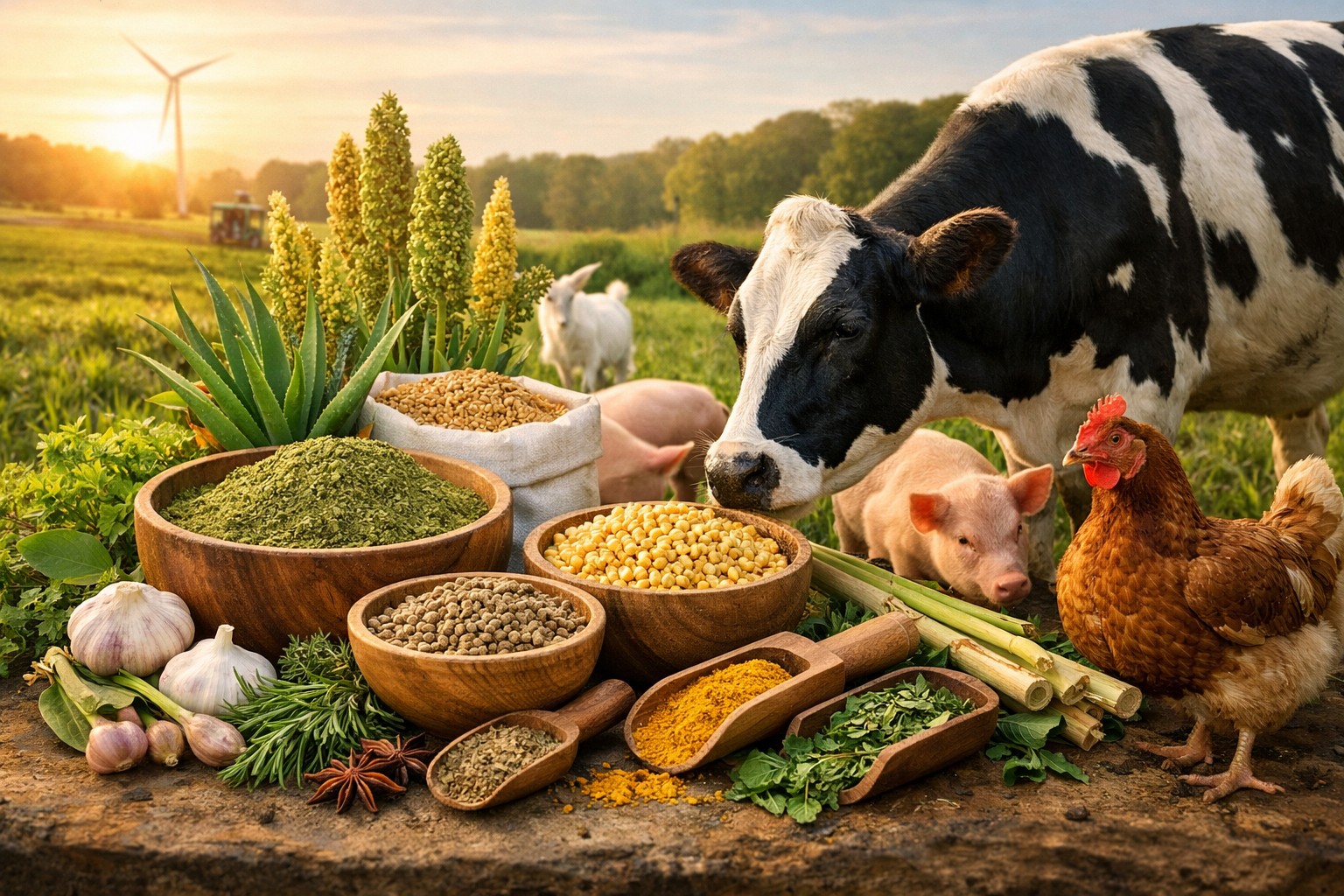
The global agricultural industry is facing a massive regulatory squeeze. Antibiotic growth promoters (AGPs) and synthetic feed additives, once the standard for commercial meat and dairy production, are facing strict phase-outs around the world. Farm managers and feed mill operators are now forced to rethink how they feed their herds and flocks.
This policy shift is driving an economic transformation across the entire supply chain. The global animal feed additives market is projected to grow at a 6.9% CAGR, a surge driven directly by the mandatory move toward natural alternatives. You can no longer rely on outdated chemical inputs to maintain your bottom line.
By 2026, transitioning to plant-based feed is no longer just about compliance. It is a proven, data-backed strategy for improving animal digestion, lowering overall feed costs, and maximizing your farm’s return on investment. Replacing synthetics with natural additives is the smartest way to future-proof your operation.
Key Takeaways
- Global regulators are phasing out synthetic additives and AGPs, making natural feed alternatives a necessity for commercial producers.
- Plant-based solutions lower total operational costs by optimizing nutrient absorption instead of relying on high feed volumes.
- Natural feed additives provide proven biological support to help livestock manage heat stress, crowding, and pathogen loads without antibiotics.
- Strict quality standards, specifically HACCP certification, are necessary to verify the safety and cost-effectiveness of any natural feed ingredient.
The Catalyst for Change: Why the Industry is Leaving Synthetics Behind
Intense regulatory pressure is fundamentally changing how commercial meat producers approach daily feed regimens. Governments worldwide are implementing strict bans on AGPs to combat the rise of antimicrobial resistance. These new rules mean you can no longer use antibiotics as a shortcut for animal growth or feed efficiency.
Consumer demand is accelerating this timeline even faster than government mandates. Today’s grocery shoppers actively look for clean, chemical-free meat and dairy products. Retailers and fast-food chains are responding by demanding their agricultural suppliers remove synthetic inputs from the supply chain well ahead of the 2026 deadlines.
This rapid shift highlights a major pain point for livestock producers. Farm managers fear that replacing familiar, cheap synthetics with natural options will erode their profit margins. When you operate on razor-thin margins, the idea of overhauling your entire nutritional program feels like a direct threat to your farm’s financial survival.
The ROI Reality: Lowering Costs Through Nutrient Optimization
It is easy to assume that natural feed ingredients will inflate your operating budget. Looking at the per-ton cost of premium additives often causes sticker shock for commercial producers accustomed to cheap synthetics. However, evaluating feed costs strictly by volume misses the actual financial picture of modern agricultural nutrition.
The industry is moving away from sheer feed volume and focusing heavily on nutrient optimization. You do not need to feed animals more; you need them to absorb more from what they already eat. When digestion improves, a larger percentage of the feed converts directly into energy and growth, rather than passing through the animal as waste.
Modern companies specializing in and offering plant-based feed ingredients prove that natural diets deliver superior ROI alongside better animal performance. By optimizing the gut environment, these natural solutions ensure every pound of feed works harder for your herd.
The bottom line is straightforward. When animals digest their food more efficiently, you spend significantly less on overall feed volume. The upfront investment in high-quality natural additives pays for itself by drastically reducing the total tonnage required to reach market weight.
Performance Comparison: Can Plant-Based Match Synthetic Results?
The most common question on the farm level is whether natural options can genuinely compete with the growth metrics of synthetics. Years of relying on chemical additives make it hard to trust botanical alternatives. However, plant-based feeds do not just match synthetic performance—they often exceed it.
The industry consensus has already shifted in favor of biological solutions. Producers now prefer natural phytogenic solutions to promote feed efficiency and animal well-being. This widespread adoption proves that natural additives hold up to the rigorous demands of large-scale commercial farming.
To understand why the industry is making this switch, look at how the two methods handle animal nutrition. The table below contrasts the outdated synthetic volume approach with the modern plant-based nutrient utilization approach.
| Feature | Synthetic Volume Approach | Plant-Based Nutrient Utilization |
|---|---|---|
| Primary Mechanism | Artificial growth stimulation and broad pathogen suppression. | Enhances natural gut flora and maximizes nutrient absorption. |
| Feed Efficiency | Requires high feed volumes to meet nutritional targets. | Lowers required feed volume by improving digestion rates. |
| Health Impact | Can disrupt natural gut bacteria and cause antibiotic resistance. | Supports immune function and builds long-term biological resilience. |
| Cost Strategy | Cheap upfront per ton, but high total consumption costs. | Higher initial ingredient cost, but lower total feed volume cost. |
Improving Feed Conversion Ratios (FCR) with Natural Enzymes
Lowering your Feed Conversion Ratio (FCR) is the fastest way to improve farm profitability. All-natural feed-enzyme complexes, similar to Naturazyme, are designed specifically to tackle this metric. These plant-based enzymes break down complex carbohydrates and anti-nutritional factors in the gut that animals cannot digest on their own.
Commercial operations are rapidly catching on to this biological advantage. The adoption of botanical and plant-based feed solutions increased across large commercial poultry farms between 2022 and 2025. Farm managers are integrating these specific enzymes because the financial return is highly predictable.
Accelerating nutrient absorption directly lowers the FCR. When you add targeted plant-based enzymes to the diet, flocks and herds extract more energy, protein, and minerals from every bite. You achieve your target market weights faster while purchasing less bulk feed.
Managing Livestock Stress and Immunity Naturally
Livestock face daily environmental challenges that impact their growth. Heat stress, rapid growth cycles, crowded barns, and high pathogen loads constantly threaten herd health. In the past, producers relied heavily on sub-therapeutic antibiotics to mask these stressful conditions and keep mortality rates low.
Without antibiotics, you have to support the animal’s biology proactively. Specific plant-based additives, such as betaine and yucca extracts, offer a natural defense against environmental stress. Betaine helps maintain cellular hydration during extreme heat, while yucca compounds bind harmful ammonia in the gut, supporting balanced intestinal bacteria and maximizing immune function.
These natural interventions yield highly visible results on the farm. In fact, more users report notable improvements in animal growth and digestive performance after integrating plant-based additives into their daily regimens. Protecting your animals naturally prevents costly disease outbreaks and keeps your growth cycles on schedule.
The Public Health Connection: Safest Feed for Producers and Consumers
The choices you make at the feed mill directly impact the end consumer. There is a direct, undeniable link between agricultural inputs and the quality of the final product sitting in the supermarket meat case. Consumers are increasingly aware of this connection and expect producers to prioritize safety at every stage of the lifecycle.
Adopting a philosophy of nutrient optimization means realizing that the safest feed for your producers ultimately results in the safest food for consumers. When you remove heavy chemicals from the diet, you eliminate the risk of synthetic residues showing up in commercial meat, milk, or eggs.
Eliminating synthetic trace minerals from the supply chain also provides massive environmental benefits. Plant-based ingredients prevent harmful chemical runoff from contaminating local soil and water tables. By switching to natural feeds, you meet rising consumer safety standards, protect the local environment, and build incredible brand trust for your agricultural operation.
Quality Assurance: Verifying Your Natural Feed Ingredients
As the demand for plant-based additives grows, the market is quickly flooded with new products. You must understand that not all “natural” labels are created equal. Some products are heavily diluted or lack the biological density needed to improve digestion, meaning strict verification is required to guarantee cost-effectiveness.
Feed mill operators should demand rigorous certifications before purchasing any new natural ingredient. Strict adherence to HACCP (Hazard Analysis and Critical Control Points) standards is absolutely essential. HACCP certification ensures the supplier actively identifies and prevents biological, chemical, and physical hazards during the manufacturing process.
Always partner with suppliers whose primary focus is utilizing natural ingredients to raise real nutritional value. Avoid companies that simply want to capitalize on botanical marketing trends without providing hard data. A trustworthy partner will offer clear research on how their plant-based solutions specifically improve FCR and support livestock health.
Conclusion
The 2026 regulatory shift away from synthetic feed additives is not just a hurdle you have to jump over. It is a strategic opportunity to improve your profit margins through better animal digestion. Relying on sheer feed volume and chemical growth promoters is an outdated, expensive model that no longer fits modern agricultural demands.
Nutrient optimization through 100% plant-based feed reduces your overall costs and boosts animal resilience during periods of high stress. By using natural enzymes and botanical extracts, you can extract more energy from less feed, lower your FCR, and protect your herds without relying on banned antibiotics.
Do not wait for the regulatory deadlines to force your hand. Farm managers and nutritionists should audit their current feed regimens today. Start testing natural alternatives now, verify your suppliers through strict HACCP standards, and position your commercial operation to thrive in a post-synthetic market.
Read also: The Ultimate Guide to Flexible Meal Prep in Oklahoma City