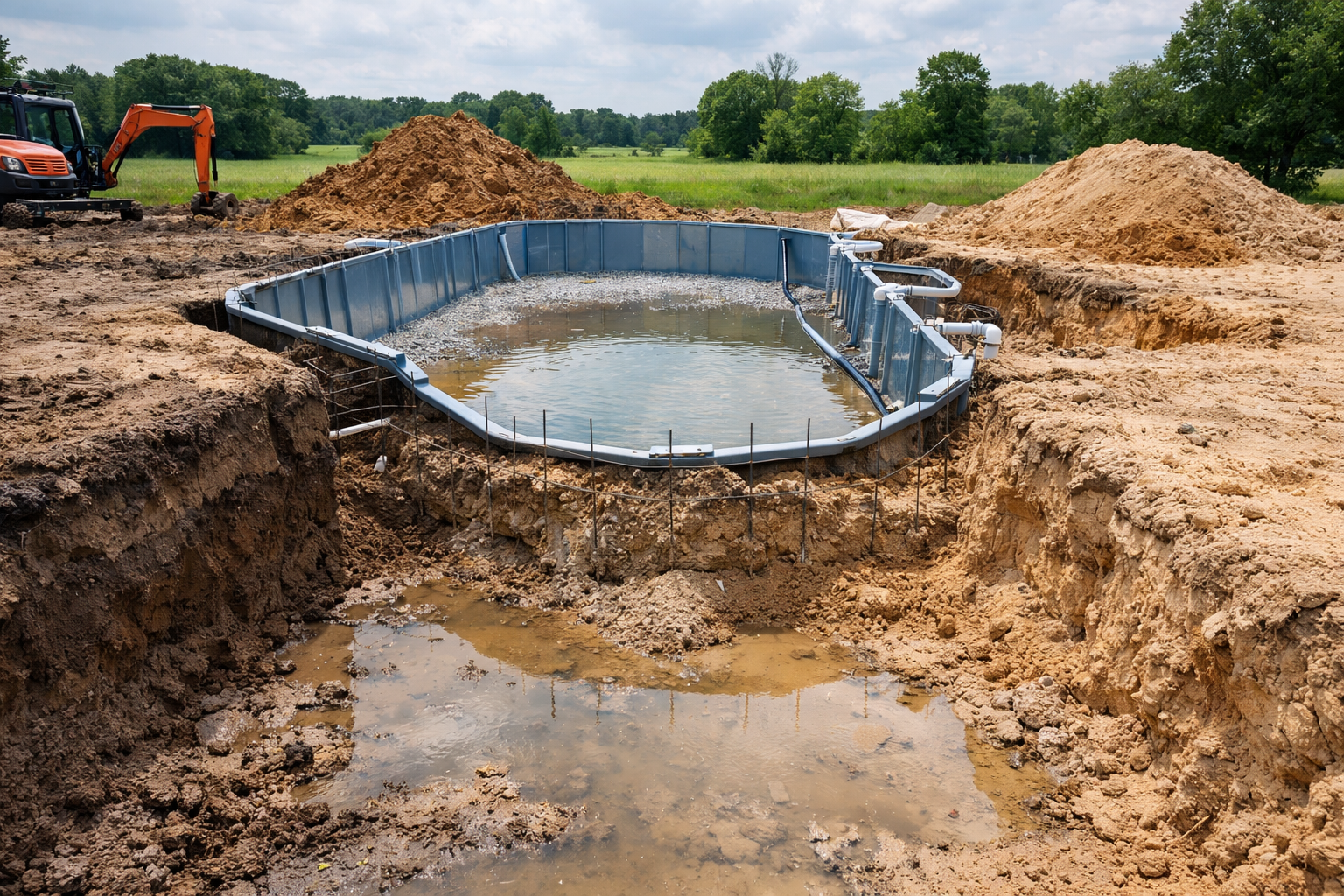
A pool design can look perfect on paper and still become a costly field problem once excavation starts. That disconnect usually comes from one issue that owners underestimate early: soil.
For property managers, facility teams, and building owners, soil conditions are not a minor construction detail. They affect excavation strategy, structural support, drainage planning, installation timeline, and long-term performance after the pool is built. When soil is evaluated early, planning decisions become more accurate and change orders are easier to avoid. When it is ignored, even a well-designed pool project can face delays, added engineering work, and preventable site complications.
How Design-First Planning Creates Site Risk
- Why Soil Gets Overlooked In Planning
Pool planning often begins with layout, aesthetics, and budget, which makes sense from an ownership perspective. The visible decisions come first: size, shape, finishes, decking, and equipment placement. Soil conditions stay out of the conversation until excavation reveals something unexpected, and by then the project is already committed to a schedule and cost structure.
That sequencing creates risk. Soil is not just what gets removed to make space for the shell. It determines how stable the excavation will be, how water moves around the pool, and what kind of structural support the installation needs. Early soil review gives contractors and owners a more realistic starting point before design assumptions harden into contracts.
- Stable Soil Supports Predictable Construction
Contractors prefer predictable soil because it supports cleaner excavation, steadier scheduling, and more consistent installation quality. When soil conditions are stable and known in advance, crews can plan the dig, staging area, and structural requirements with fewer surprises. That reduces the chance of mid-project redesigns or rushed decisions under deadline pressure.
This is one reason experienced builders working on projects such as custom pools in Minneapolis by Nassau Pools and Spas often emphasize site evaluation early in the process. Even when the pool concept is straightforward, the ground conditions beneath it can change excavation approach, drainage needs, and structural reinforcement requirements. The pool may be the visible asset, but the soil determines how reliable the foundation strategy will be.
- Expansive Soil Changes The Risk Profile
Expansive soils create one of the most important planning challenges in pool installation. These soils swell when wet and shrink when dry, which can introduce movement that affects pool shells, decking, plumbing lines, and surrounding hardscape. If this risk is not addressed during planning, the project may look complete at handoff but develop cracking or settlement problems later.
Contractors evaluate expansive soil conditions because they influence both structure and site drainage strategy. A pool shell may require additional engineering support, and the surrounding landscape may need grading and moisture management designed to reduce movement pressure. For owners, the key point is practical: soil expansion risk changes what a durable installation requires, even if the visible pool design stays the same.
- Sandy Soil Alters Excavation And Support
Sandy soil can simplify some parts of excavation, but it introduces different planning concerns. It may be easier to dig than dense clay, yet it can be less stable at excavation walls and may shift more readily without proper support. That affects safety during construction and can influence how contractors stage work as the pool shape is formed.
Sandy conditions also matter for water movement. Drainage patterns around the pool can behave differently in coarse soils, and planners need to consider how groundwater or runoff may move near the structure. The goal is not to label sandy soil as good or bad, but to treat it as a condition that changes the installation approach. Predictability comes from adapting the plan to the soil, not forcing the same method on every site.
- Clay Soil Affects Drainage Decisions
Clay-heavy soil is common in many regions and can create major drainage challenges around pool installations. Because clay drains slowly, water can remain in the surrounding soil longer after rain or irrigation. That can increase hydrostatic pressure concerns, complicate excavation conditions, and affect the long-term performance of nearby deckiaddressscape features.
Contractors address this by carefully planning drainage strategies, grading details, and backfill strategies. Clay conditions also influence when work can proceed efficiently after wet weather, which affects construction timing. For property managers balancing schedules, this matters because weather delays are often worse on sites with slow-draining soil. Early planning around clay conditions helps protect both the installation and the project timeline.
Better Pool Planning Starts With The Ground
Swimming pool installation planning is stronger when soil conditions are evaluated early and treated as core design information. Soil type, compaction, fill history, drainage behavior, and groundwater conditions all shape excavation strategy, structural support, scheduling, and long-term performance. Ignoring those factors does not make them less important; it only delays when they affect the project.
For property managers, facility teams, and building owners, the practical advantage is clear. Soil-aware planning improves budget predictability, reduces construction surprises, and supports a pool installation that performs reliably after the project is complete. The pool may be the feature everyone sees, but the success of the installation starts below grade, where the site either supports the plan or forces it to change.
Read also: How do Wedding DJs Coordinate Seamless Ceremony-to-Reception Transitions?