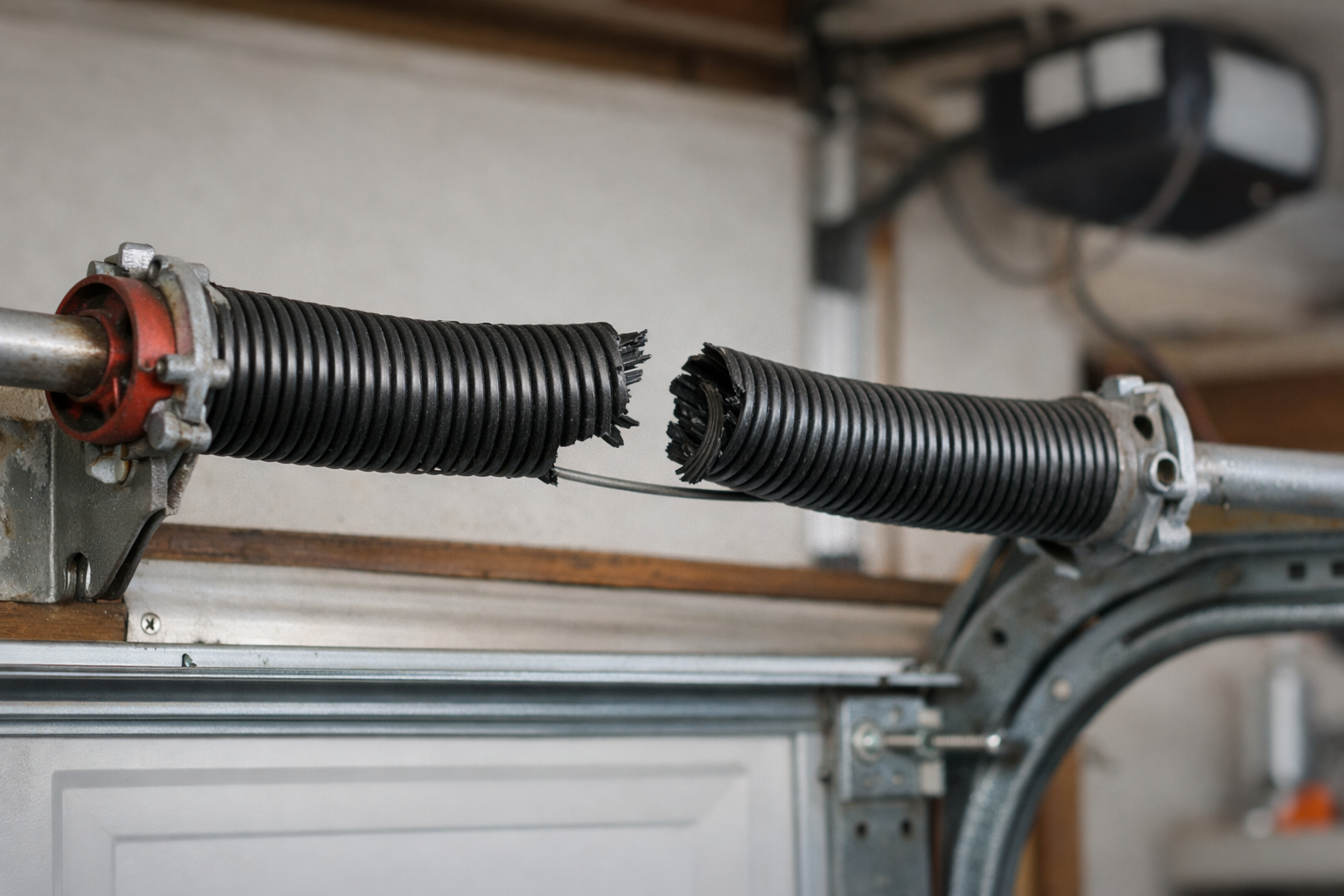
Garage doors rely on a system of interconnected components to operate smoothly, and the springs play a critical role in balancing the door’s weight. When a spring breaks, it can have immediate, noticeable effects on both the door’s function and the garage’s overall safety. We will explore how broken springs compromise door performance, the dangers they pose, and why timely attention is essential. Understanding these factors allows homeowners to address issues before they escalate, reducing the risk of accidents and costly damage. Garage door springs are under extreme tension, and their failure can cause sudden, unpredictable movements, making awareness and proper maintenance crucial. Recognizing early warning signs can help prevent injuries and ensure the garage remains a secure and functional space.
The Role of Springs in Garage Door Operation
Garage door springs are designed to counterbalance the door’s weight, making it easier to lift and lower the door with minimal effort. There are primarily two types of springs: torsion springs, mounted above the door that twist to create tension, and extension springs, which stretch along the sides of the door. Both systems are engineered to absorb the energy required to move heavy doors, reducing strain on the opener and the user. When a spring breaks, the door loses its counterbalance, often making it extremely difficult or impossible to lift manually.
Attempting to operate a door with a broken spring can strain the opener motor, leading to further mechanical issues. For homeowners seeking timely solutions, Garage Door Repair in Westland with Tucker Door & Window ensures the springs are restored safely and efficiently. The smooth, controlled motion of the door is compromised when springs fail, creating jerky or uneven movement that signals an underlying problem. Regular inspection of spring tension and condition is critical to maintaining the door’s overall performance.
Common Signs of a Broken Garage Door Spring
Identifying a broken spring early can prevent accidents and additional damage to the garage door system. One of the most noticeable signs is difficulty lifting the door, as the door may feel unusually heavy or resist opening entirely. Loud bangs or snapping sounds often accompany a spring break, which can startle homeowners and signal immediate danger. Another indicator is the door moving unevenly or tilting to one side, which indicates that the tension has been disrupted. Visual inspection can sometimes reveal a gap in the spring or a noticeable bend, although these may be difficult to spot without proper lighting and positioning. Not addressing these signs promptly can lead to further mechanical strain, including bent tracks, broken cables, or damage to the opener itself. Awareness of these warning signals allows homeowners to take action before the door becomes unsafe.
Safety Hazards of Operating a Door with Broken Springs
Operating a garage door with a broken spring presents significant safety risks due to the sudden release of stored energy. Springs are designed to withstand large amounts of tension, and when they fail, parts of the spring or connected components can snap forcefully. This can result in injuries ranging from bruises and cuts to more serious harm if the spring strikes someone directly. Additionally, an unbalanced door may fall abruptly, creating a crushing hazard for pets, children, or adults attempting to open or close it. The malfunctioning motion can also damage vehicles parked nearby, as the door may drop unpredictably. Attempting DIY repairs without proper tools and safety precautions can increase these dangers, emphasizing the importance of professional handling or careful adherence to safety guidelines. Ensuring the garage door is fully functional prevents these hazards and contributes to a secure home environment.
Effects on Garage Door Mechanisms
Beyond immediate safety concerns, broken springs can compromise other components of the garage door system. The opener, designed to assist rather than lift the full weight of the door, may overheat or burn out if forced to handle the extra load. Tracks and rollers can bend or misalign under uneven tension, leading to increased friction and wear over time. Cables connected to the springs are also at risk, as uneven stress may cause fraying or snapping, creating additional repair needs. Even panels and hinges can suffer damage if the door moves irregularly. These cascading effects illustrate how a single broken spring can impact the entire system. Prompt repair or replacement not only restores smooth operation but also prolongs the lifespan of all interconnected components. Preventive measures, such as lubrication and periodic inspections, help reduce the likelihood of sudden spring failure and protect other parts of the door.
Maintenance and Prevention Tips
Regular maintenance is key to reducing the risk of spring failure and maintaining door safety. Lubricating springs and rollers helps reduce friction and wear, extending the life of each component. Keeping the door balanced by testing its manual operation can reveal tension issues before a spring breaks completely. Cleaning tracks and ensuring cables remain taut also contribute to smoother operation and reduce unnecessary stress on the system. While some homeowners attempt DIY adjustments, handling springs under tension can be extremely dangerous. Using proper tools and following safety procedures—or enlisting professional help—ensures repairs are conducted safely. Establishing a routine inspection schedule allows for early detection of wear, corrosion, or minor fractures, preventing complete failure and the associated risks of operating a compromised garage door.
Broken garage door springs significantly impact both the door’s function and safety. They disrupt smooth operation, create unbalanced movement, and pose serious hazards to anyone nearby. The failure of a spring can also strain other mechanical components, leading to costly repairs and reduced lifespan of the door system. Regular maintenance, including lubrication, balance testing, and careful inspection, can help identify issues before they become emergencies. Addressing broken springs promptly is crucial for a secure, functional garage, ensuring the door operates reliably and safely. Homeowners who monitor their garage doors and respond to warning signs maintain not only convenience but also protection for their household and property.
Read also: How Transfection Enhancers Elevate Viral Vector Production Efficiency