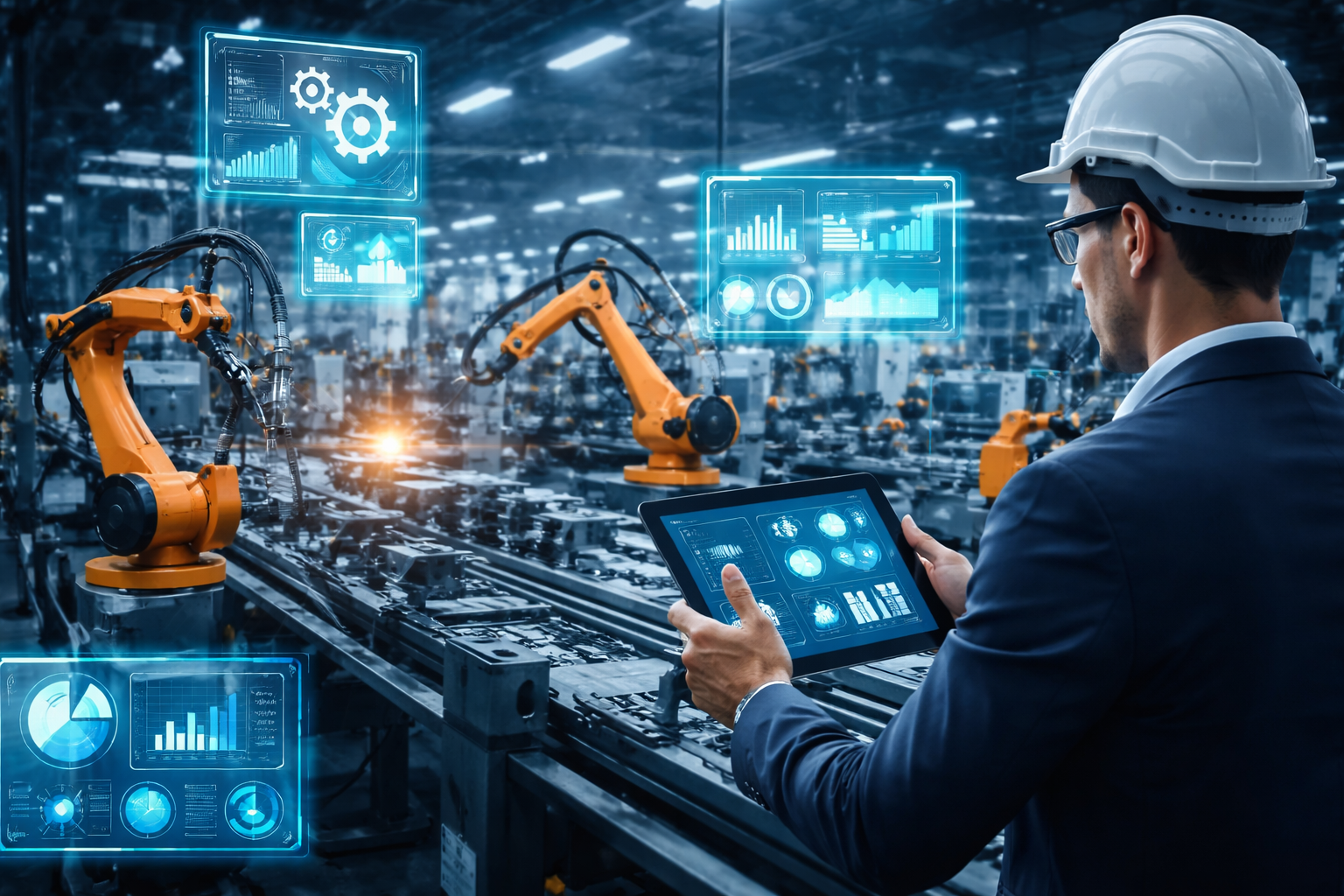
Many manufacturers invest in automation and still struggle with delays, scrap, and uneven throughput. The problem is rarely a lack of machines. It is a lack of connection between machines, systems, and decisions.
That distinction matters for plant owners, facility managers, and operational leaders under pressure to increase output without expanding floor space or labor costs at the same pace. Smart factory integration improves efficiency by connecting production equipment, maintenance workflows, inventory signals, and quality data into one operating rhythm. Instead of treating each line, system, or department as a separate island, integration creates a coordinated production environment that reduces hidden waste and improves day-to-day control.
Smart Integration Turns Data Into Output
- Efficiency Drops When Systems Stay Isolated
A factory can have modern equipment and still operate like a patchwork. One machine may produce real-time data, another may rely on manual logs, and scheduling may still run from spreadsheets disconnected from actual line conditions. When systems are isolated, teams spend time translating information instead of acting on it.
That gap creates familiar problems. Supervisors chase status updates, maintenance reacts late, and production plans drift because the floor is not communicating clearly with planning tools. Smart factory integration addresses this by linking key systems so information moves faster than the problems it describes. Efficiency improves not just from visibility but also from reducing delays caused by fragmented operations.
- Connected Lines Improve Production Flow
Smart integration becomes practical when production lines start sharing reliable signals. Machine status, cycle counts, downtime events, and throughput data can be captured and routed to the people who need it without waiting for shift-end reports. That allows teams to respond during production, not after performance has already slipped.
This is especially useful in plants with multiple process steps or mixed product runs, where small delays compound quickly. Manufacturers upgrading line coordination often evaluate component compatibility and process requirements across equipment suppliers, and resources like https://ad.engineering/linesets/ can be part of broader planning conversations when aligning production infrastructure with integration goals. The bigger point is consistency: integrated lines make handoffs clearer and reduce the uncertainty that slows output.
- Real Time Visibility Changes Daily Management
Production meetings are more effective when they are built on current information rather than yesterday’s assumptions. Smart factory integration gives supervisors and plant leaders a clearer view of what is running, what is blocked, and where performance is slipping in real time. That changes the quality of decisions made during a shift.
Instead of relying on informal updates from the floor, teams can see downtime patterns, speed losses, and queue buildup as they develop. This reduces guesswork and helps prioritize action. A line slowdown may appear to be an operator issue at first, but integrated data may reveal that the actual cause is delayed material replenishment or recurring micro-stoppages upstream. Real-time visibility does not solve problems automatically, but it shortens the time between detection and correction.
- Maintenance Becomes More Predictable
One of the strongest efficiency gains from smart integration comes from maintenance coordination. In many plants, maintenance teams still work from a mix of emergency calls, paper logs, and delayed reporting. By the time a recurring issue is recognized, production has already lost hours to stops, restarts, and reduced speed.
Integrated factory systems improve this by linking equipment signals with maintenance workflows. Downtime events can be categorized more accurately, recurring faults can be tracked by asset, and service history can be connected to actual line performance. That helps maintenance teams move from reactive firefighting to more targeted intervention. The result is not only fewer breakdowns but also a more stable production flow, which directly affects throughput and labor efficiency.
- Quality Data Should Follow The Process
Quality control often slows production when inspection data is disconnected from the line. Operators produce parts, inspectors identify issues later, and rework accumulates because feedback arrives too late. Smart integration improves efficiency by connecting quality signals to production steps while work is still moving.
When inspection data, reject codes, and measurement trends are tied to line conditions, teams can identify patterns faster. A dimensional issue may correlate with a machine setting drift, tool wear, or temperature change that would otherwise take hours to isolate. Integrated quality tracking reduces wasted production by helping teams catch process changes earlier. It also improves accountability because decisions are based on shared data rather than conflicting reports from separate systems.
-
Scheduling Works Better With Live Signals
Production schedules often fail because they are based on ideal assumptions rather than actual factory conditions. A schedule may look efficient on paper, but if machine availability, changeover timing, or material readiness is inaccurate, the plan collapses on the floor. Smart factory integration improves scheduling by feeding live production and asset data back into the planning process.
This creates a more realistic operating model. Planners can see whether a line is recovering from downtime, whether a prior job ran long, or whether a bottleneck process is at risk before releasing the next sequence. Over time, integrated scheduling improves not only response speed but also planning accuracy. Manufacturers gain efficiency by stopping the blind pushing of work into queues and starting to match production flow to real capacity.
Smarter Connections Create Stronger Output
Manufacturers improve efficiency through smart factory integration by reducing the hidden delays caused by fragmented systems. Connected production data, maintenance workflows, quality feedback, scheduling signals, and inventory coordination give plant teams a clearer operating picture and faster control over daily performance.
For facility managers, plant leaders, and owners, the advantage is practical and measurable. Smart integration increases throughput, improves uptime, stabilizes planning, and helps existing assets perform closer to their real capacity. It also supports better long-term investment decisions because operational problems become easier to identify before new equipment is purchased. In competitive manufacturing environments, efficiency gains rarely come from one machine alone. They come from how well the entire factory works together.
Read also: None Company Objectives 2025: Why Businesses Must Define Strategic Direction Now