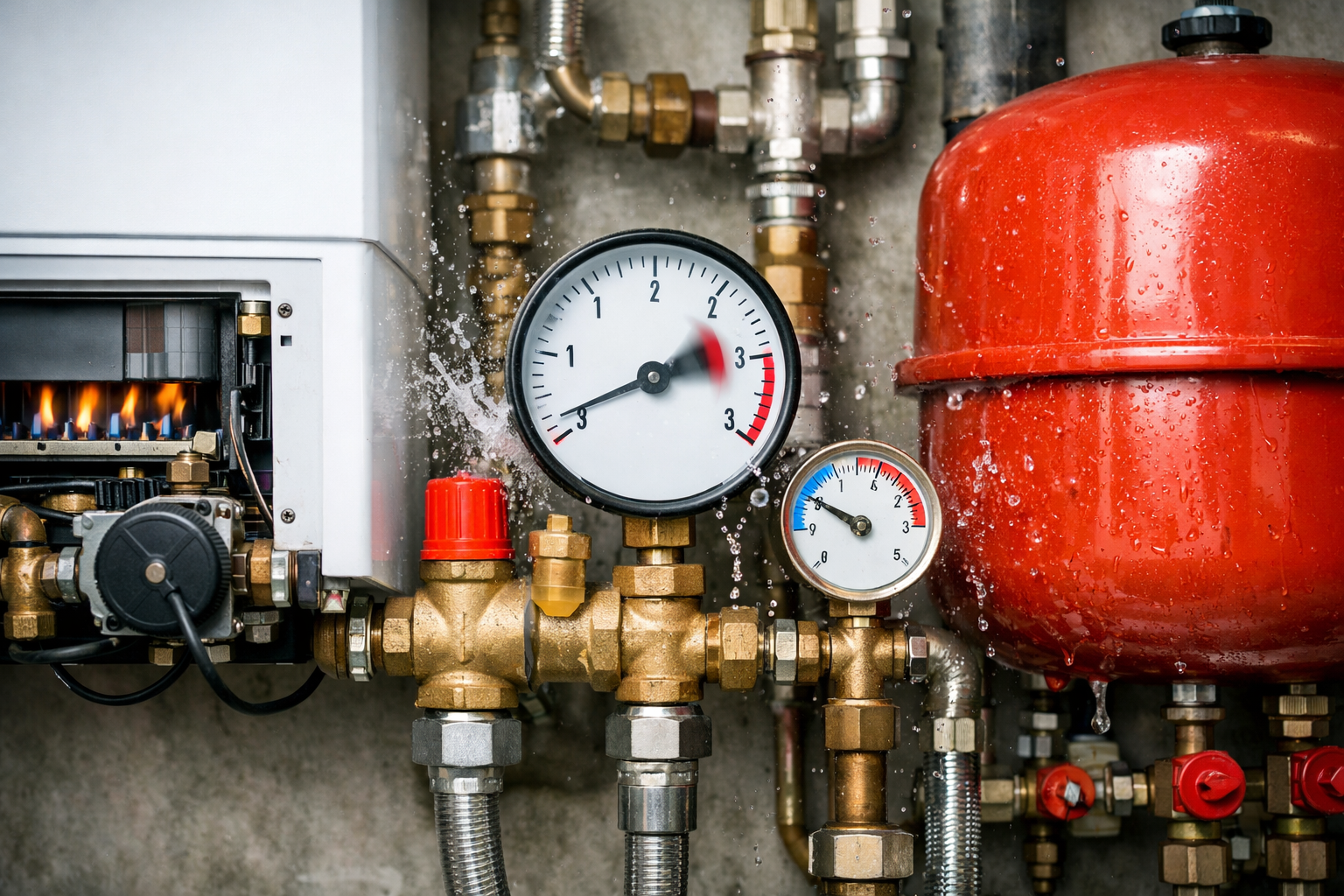
Fluctuating water pressure is often treated as a plumbing annoyance, yet it can quietly influence how certain heating systems perform and how long components last. Homes that rely on hydronic heating, combination boiler systems, indirect water heaters, or tankless units experience a close relationship between water flow, valves, and heat transfer. When pressure spikes and drops, the system can experience temperature swings, noisy operation, and accelerated wear on seals and fittings. In some cases, homeowners notice the symptoms during showers or when using the sink, but the root cause also affects the equipment serving space heating. Understanding how pressure changes move through the system helps homeowners diagnose comfort issues earlier and decide whether the solution lies in supply piping, valves, or heating controls.
Pressure changes affect performance.
- Flow stability and heat transfer in water-based systems.
Heating systems that use water rely on predictable flow to deliver steady temperatures. In hydronic setups, pumps circulate heated water through baseboards, radiators, or in-floor tubing, and the system is usually sealed, meaning domestic pressure fluctuations do not directly change loop pressure. However, domestic pressure still matters in systems that include automatic fill valves, pressure-reducing valves, or make-up water connections. If supply pressure drops too low, a fill valve may not maintain proper system pressure, which can introduce air and reduce circulation efficiency. If supply pressure spikes, it can stress fill components and cause nuisance pressure changes at the point where domestic water connects to the heating system. Combination boilers and tankless units are more directly affected because they depend on domestic flow to activate and modulate. When pressure drops, flow can fall below the activation threshold, causing burners to cycle on and off, creating temperature swings at the fixtures. When pressure surges, flow can increase suddenly, reducing dwell time in the heat exchanger and cooling the outlet temperature unless the unit can ramp quickly enough. These shifts are often experienced as hot-cold fluctuations during showers. Over time, repeated cycling due to pressure fluctuations can increase wear on sensors and valves. Stable flow is the quiet partner of stable heat, and pressure fluctuations are one of the common reasons a system that is otherwise functioning can feel inconsistent.
- Pressure regulators, expansion control, and hidden stress points
Many homes rely on a pressure-reducing valve to keep municipal pressure from running too high. When that valve fails or becomes unstable, the house pressure can fluctuate, creating stress on fixtures and heating-related equipment. High pressure increases the force on seals, gaskets, and valve seats, while low pressure can reduce flow through appliances that need a minimum rate. Water heaters, boilers with indirect tanks, and tankless units often include check valves and backflow prevention features that can isolate pressure zones. That isolation is useful for safety, but it also means thermal expansion can build pressure when water heats, especially if an expansion tank is missing or waterlogged. Pressure spikes from expansion can mimic supply pressure issues and may show up as relief valve drips, banging noises, or intermittent changes in shower flow. In homes where the heating system shares space with domestic equipment, these pressure events can complicate troubleshooting because the symptom appears at a faucet, but the cause may be a failing expansion tank or regulator. Homeowners dealing with repeated swings may consult Philadelphia Plumbing to evaluate the pressure-reducing valve, verify expansion control, and confirm whether backflow devices are creating a closed system where pressure has nowhere to go. Addressing the regulator and expansion strategy often stabilizes the entire household water system and reduces stress on heating-related components.
- How pressure swings influence boiler fill behavior and air issues.
While a sealed hydronic loop is not meant to depend on changing domestic pressure, the connection between domestic water and the heating system still matters when the system needs make up water. Small leaks, automatic air vents, or maintenance events can cause pressure loss in the heating loop, and the fill valve responds by adding water. If the domestic pressure is inconsistent, the fill valve may add water unpredictably, which can cause air-related problems. Air enters more easily when pressure is low, and air in the loop causes gurgling, uneven heat, and poor circulation. In floor heating, air pockets can reduce comfort in certain zones and make the system feel slow to respond. Pressure swings can also affect how certain safety devices operate, such as low-water cutoffs or pressure switches. If the heating loop pressure drifts due to fill instability, the boiler may lock out or cycle more frequently. Cycling affects efficiency and increases wear. Another subtle impact is sediment movement. Frequent pressure changes can disturb mineral buildup in older piping, sending debris toward strainers, flow sensors, or narrow passages in heat exchangers. This can cause intermittent issues that are hard to reproduce during a service visit. A stable pressure environment supports consistent fill behavior, helping keep hydronic systems quieter, more balanced, and less prone to nuisance shutdowns.
Stable pressure supports stable heat.
Fluctuating water pressure can affect heating systems by altering flow, triggering cycling, and stressing valves and seals that support consistent performance. Combination boilers and tankless units respond directly to flow changes, leading to temperature swings when pressure drops or spikes. Pressure-reducing valves and thermal expansion control can create hidden pressure events that affect both fixtures and heating-related equipment. In hydronic systems, unstable fill behavior can introduce air, reduce circulation, and cause uneven heat or nuisance shutdowns. Recognizing the signs and addressing the pressure regulator, expansion tank, and related flow restrictions can restore steadier water delivery and smoother heating operation. When pressure remains consistent, both comfort and component longevity typically improve.