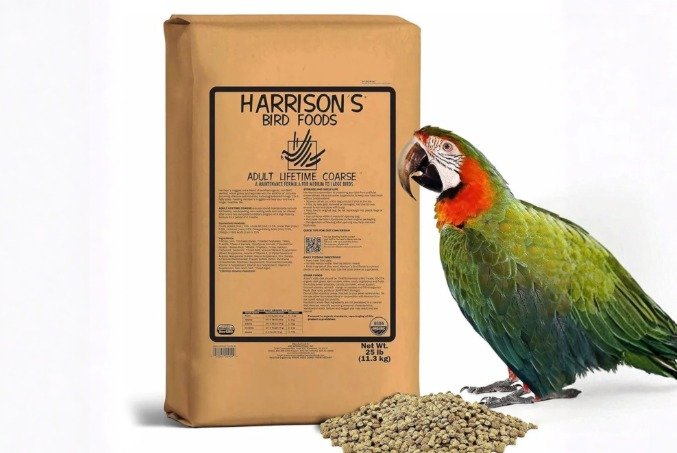
Most owners believe the seeds are healthy since they appear natural. But among the least nutrient-dense items you can feed a parrot are seeds. Birds select the nice, fatty parts from a mixed bowl and ignore the others. That behavior leads to actual deficiencies in calcium, vitamin A, and general balance over several months. Harrisons bird pellets instantly solve this problem because every pellet has the same healthy composition. There’s no picking and choosing involved.
The Seed Problem Nobody Talks About Enough
Parrots are smart. That’s actually the issue here. Given options, they’ll always chase the tastiest bits first. Sunflower seeds and nuts go fast. Everything else sits in the bowl untouched.
Slow, silent dietary shortcomings result from this selective feeding. Low calcium levels weaken bones over time. Low vitamin A levels affect immune system function. All of this takes time to manifest, which is precisely why so many owners fail to notice it until a veterinarian flags it.
Pellets remove the guesswork completely. Whatever the bird eats, it gets the full formula, every time.
Why People Keep Calling Harrisons Bird Pellets the Healthiest Parrot Food
Avian nutrition research has pointed toward formulated diets for years now. Compared with birds on seed-heavy diets, birds on pellet-based diets usually exhibit more consistent energy levels, better feather quality, and fewer liver issues. The majority of veterinarians advise pellets as a baseline diet since that pattern appears frequently enough.
This explains why the brand is frequently referred to as the healthiest parrot food. It’s not a tagline. It comes down to ingredient consistency. Organic grains, no synthetic dyes, no unnecessary preservatives. Simple enough to actually explain if someone asks what’s in the bag.
What’s Actually Inside the Harrisons Bird Pellets Formula
A few things stand out once you read the label closely:
- Organic legumes and grains for steady energy, not sugar spikes
- Balanced calcium and phosphorus for bone and beak strength
- Natural preservation methods instead of chemical additives
- No artificial coloring added purely for visual appeal
- Omega fatty acids that support feather quality over time
None of this is complicated. That simplicity is exactly why so many owners stick with it long term.
Making the Switch Without a Fight
Birds resist sudden change. Do not be shocked if a bird that only eats seeds ignores you for days after you drop a dish of pellets in front of it.
Go slow instead. Mix a small amount of pellets into the existing food and gradually increase the ratio over two to three weeks. Some owners soften pellets slightly with warm water during early stages. Others crush a few pieces and sprinkle them over a familiar treat just to build curiosity.
Watch appetite and droppings closely during this period. If your bird eats less than usual, slow the transition further. Each bird adapts at its own speed. Some take two weeks, others need closer to a month. Age and diet both play a part, so comparing your bird’s progress to someone else’s timeline usually causes unnecessary concern. There’s no benefit to rushing it.
One Formula Doesn’t Fit Every Bird
A breeding pair needs more fat and protein than an older bird that mostly perches and rests. Younger, more energetic birds have different nutritional requirements since they burn energy more quickly.
Since adult maintenance and high-potency versions are not interchangeable, it is crucial to confirm the precise formula in this case. If you are not sure which option best fits your bird’s age or activity level, Birdie Boutique offers thorough explanations of each, making it easy to compare.
A Quick Word on the Research
For decades, veterinary literature on companion bird nutrition has shifted toward prepared foods, as meals high in seeds are associated with higher rates of obesity and organ strain in confined parrots. This is one of the reasons pellets are frequently suggested as a daily foundation, with fresh vegetables put on top instead of just seeds.
Conclusion
Changing a bird’s food isn’t a huge deal, but most owners aren’t aware of how crucial it is at first. For Harrisons birds, pellets offer an easy way to address nutritional deficiencies without creating uncertainty around feeding times. The everyday routine takes care of itself if you add fresh veggies and occasionally indulge.
There is a reason why this pellet brand is frequently mentioned as the healthiest choice for parrot food when comparing pellet brands. Browse the full range through Birdie Boutique and find the formula that actually matches your bird’s needs.
FAQs
Will my bird refuse pellets at first?
Some do, especially after years on seeds. Gradual mixing usually resolves this within a few weeks.
Is it possible for my bird to exclusively eat pellets?
They can serve as the foundation of the diet, although occasional fruit and fresh vegetables are still very beneficial.
How can I figure out what formula works best for my bird?
Age and activity level matter most. Younger or breeding birds typically need higher fat content than older, less active ones.