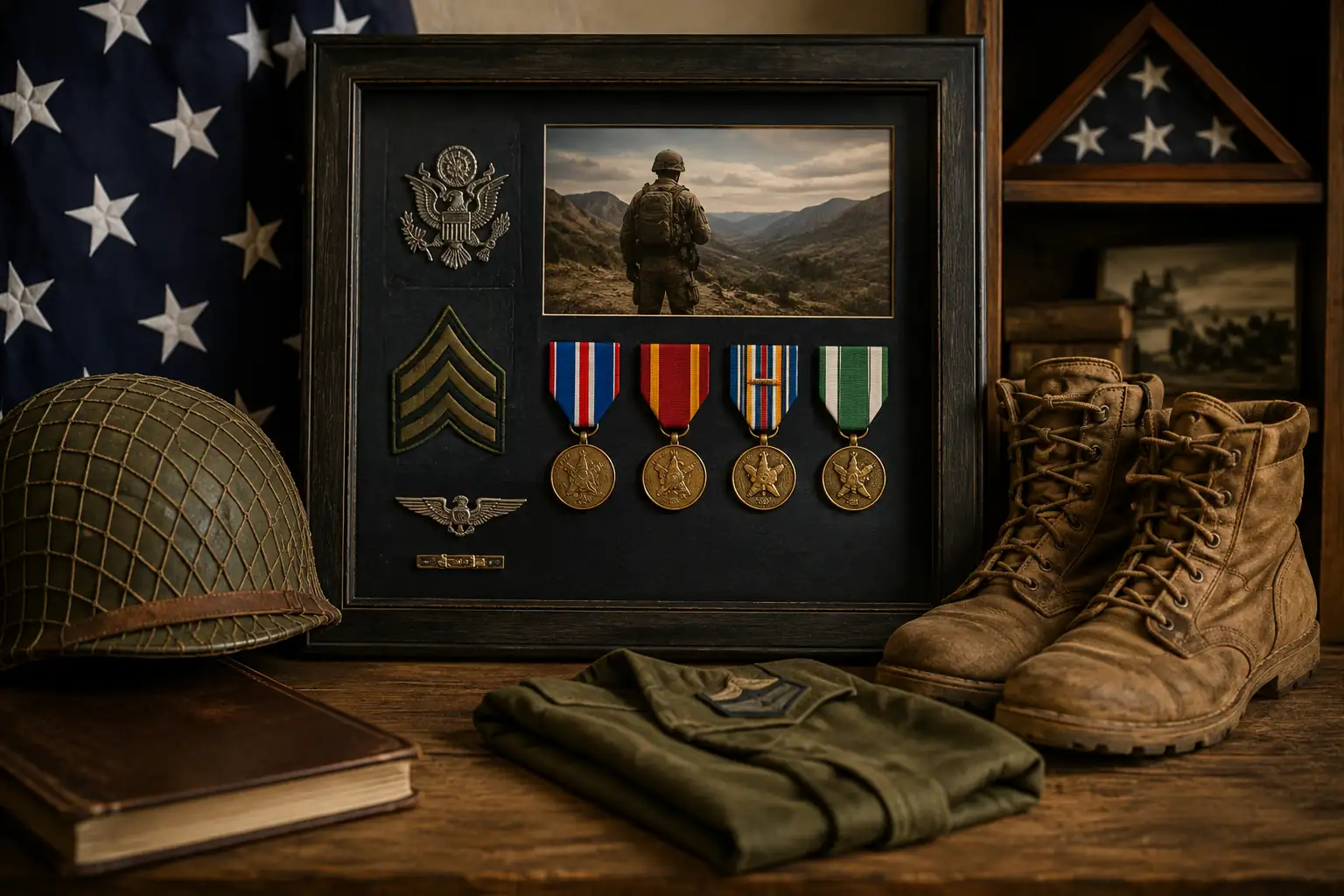
Military service leaves behind more than memories. Medals, photographs, certificates, patches, uniforms, and other keepsakes can tell the story of a person’s dedication and achievements. For veterans and their families, these items often carry deep personal meaning.
After retirement, finding a thoughtful way to preserve and display these belongings can turn them into a lasting tribute. Whether you’re creating a small display for a few medals or a complete presentation of someone’s military career, there are several ways to make the collection both attractive and meaningful.
Why Military Memorabilia Deserves to Be Preserved
Military memorabilia can represent important moments that may otherwise be difficult to capture. A medal can recognize an achievement, while a photograph can bring back memories of a particular assignment or period of service.
Over time, however, these items can become damaged if they’re stored improperly. Paper documents may deteriorate, fabrics can collect dust, and metal items may become scratched or tarnished.
A carefully planned display provides a way to keep these pieces organized while allowing family members and visitors to appreciate their history.
Start With a Story
Before designing a display, think about the story you want it to tell.
For example, a retirement display might include a service photograph, medals, rank insignia, ribbons, and a certificate. A family memorial could focus on a veteran’s portrait and most significant awards.
You don’t necessarily need to include everything. Selecting the pieces that best represent a person’s service can create a cleaner and more meaningful presentation.
Popular Items to Include
Military displays can contain many different types of memorabilia. Some of the most common include:
- Medals and ribbons
- Military badges
- Rank insignia
- Service patches
- Certificates and commendations
- Photographs
- Unit insignia
- Challenge coins
- Uniform sections
- Flags
- Letters and documents
Combining different types of items can make the display more personal. For example, medals can be positioned alongside a photograph and a short description of the veteran’s service.
Choose a Display Style
The design should match both the memorabilia and the person being honored.
A traditional wooden frame can give the display a classic appearance, while a simple contemporary frame may suit a modern home or office. Some displays use dark backgrounds to create contrast with medals and ribbons, while lighter backgrounds can make photographs and documents stand out.
For collections containing several three-dimensional objects, a shadow-box style display can provide additional depth and space.
When selecting military frames, consider the size, number, and type of items you want to display. The right frame should provide enough room without making the arrangement feel crowded.
Arrange Items Before Mounting Them
It’s a good idea to plan the layout before permanently attaching anything.
Place the items on a table and experiment with different arrangements. The most important medal or photograph can serve as the focal point, with supporting items positioned around it.
Try to maintain enough space between individual pieces. A display can quickly become difficult to appreciate when too many objects are packed together.
A balanced arrangement also makes it easier for someone viewing the display to understand the story behind the items.
Protect Important Documents and Photographs
Paper memorabilia requires particular attention. Certificates, photographs, letters, and other documents can fade or deteriorate when exposed to sunlight, humidity, or unsuitable mounting materials.
Consider using archival-quality materials when framing these items. UV-protective glazing may also help reduce damage caused by prolonged exposure to light.
The display should ideally be placed away from direct sunlight and areas with high humidity. These simple precautions can help preserve important memorabilia for much longer.
Add Context to the Display
A small amount of information can make a display much more meaningful.
Depending on the collection, you might include the veteran’s:
- Name
- Rank
- Branch of service
- Unit
- Years of service
- Important awards
- Deployment dates
- Retirement date
A simple nameplate or engraved plaque can provide context without distracting from the memorabilia itself.
For family displays, a short personal message can also make the presentation more meaningful.
Consider Professional Framing
Some military items can be difficult to mount safely, especially uniforms, flags, medals, and objects with significant depth.
Professional framing services can help determine the appropriate materials, layout, mounting method, and protective covering. This can be particularly useful when the items are old, rare, or emotionally valuable.
Professional guidance can also help create a display that looks organized while keeping the memorabilia secure.
Create a Family Heirloom
One of the biggest advantages of preserving military memorabilia is the opportunity to pass its story to future generations.
Children and grandchildren may not have experienced the veteran’s years of service themselves. A carefully arranged display gives them something tangible that can help explain that history.
A framed collection can become part of a family’s home for decades. It can also provide an opportunity for older family members to share stories about the people, places, and experiences represented by each item.
Don’t Let Important Memories Stay in Storage
Military memorabilia deserves more than a forgotten box in a closet. Medals, photographs, awards, and other service items can be preserved and displayed in a way that respects their importance.
With thoughtful organization, suitable materials, and a well-planned design, a military display can become a lasting tribute to service and sacrifice.
For veterans and their families, the goal isn’t simply to create an attractive wall display. It’s to preserve a piece of personal history and make sure the stories behind those objects continue to be remembered.