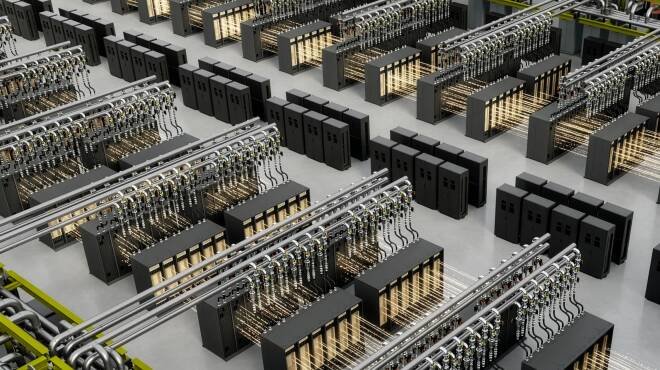
Unlike traditional optical interconnects that are optimized for longer distances, 1.6T DAC is specifically designed for ultra-short reach scenarios such as intra-rack and adjacent-rack connectivity. By using high-speed copper twinax cables instead of optical transceivers, DAC solutions significantly reduce both power consumption and cost. This makes them particularly attractive in large-scale AI deployments, where thousands of connections are required within tightly packed compute racks.
As data rates move toward 1.6Tbps per link, driven by next-generation SerDes technologies such as 224G PAM4 signaling, 1.6T DAC is becoming a foundational building block for AI cluster architecture. It enables high-density GPU communication while maintaining simplicity in design, which is essential for hyperscale operators seeking scalable and efficient infrastructure.
Understanding 1.6T DAC Architecture and Technology
High-Speed Copper Transmission with 224G SerDes
The core of 1.6T DAC technology lies in its ability to support extremely high data rates over copper using advanced SerDes (Serializer/Deserializer) technology. Modern implementations rely on 224G PAM4 signaling per lane, enabling multiple parallel lanes to achieve an aggregate bandwidth of 1.6Tbps. This represents a significant leap from previous 400G and 800G DAC generations, allowing a dramatic increase in intra-rack communication capacity.
However, transmitting such high-speed signals over copper introduces significant challenges, particularly in terms of signal attenuation and crosstalk. To address these issues, 1.6T DAC assemblies incorporate advanced equalization techniques and carefully engineered twinax cable structures. These enhancements help maintain signal integrity over short distances, typically ranging from 1 to 3 meters depending on system design and power class.
Passive and Active DAC Designs
1.6T DAC solutions are generally divided into passive and active variants. Passive DACs rely entirely on electrical signaling without signal amplification, making them extremely low power and cost-effective for very short distances. Active DACs, on the other hand, incorporate retimers or signal conditioning components that extend reach and improve signal integrity at the expense of slightly higher power consumption.
In AI data center environments, both types play important roles depending on the specific use case. Passive DACs are commonly used for intra-rack GPU-to-switch connections, while active DACs may be deployed for slightly longer interconnects within the same row. This flexibility allows network architects to optimize performance, cost, and power efficiency based on physical layout requirements.
Why Short-Reach Connectivity Matters in AI Data Centers
GPU Clusters and Intra-Rack Traffic Patterns
AI workloads, particularly large language model training, rely heavily on communication between GPUs. A significant portion of this traffic occurs within the same rack, where multiple GPUs are connected to a top-of-rack switch. In these scenarios, latency and bandwidth efficiency are critical, but transmission distances are extremely short, often less than a few meters.
This makes optical solutions unnecessarily complex and expensive for many intra-rack connections. Optical transceivers require additional components such as lasers, photodetectors, and optical fibers, all of which increase cost and power consumption. In contrast, 1.6T DAC provides a direct electrical connection that eliminates optical conversion overhead, resulting in lower latency and more efficient data transfer.
Power and Cost Efficiency at Scale
One of the most compelling reasons for adopting 1.6T DAC in AI data centers is the significant reduction in power consumption. Optical modules typically consume more power due to laser operation and signal processing requirements. When scaled across thousands of links, this power difference becomes a major operational factor affecting both electricity usage and cooling requirements.
From a cost perspective, DAC solutions are also considerably more economical. Copper cables are less expensive to manufacture than high-speed optical transceivers, and they do not require optical alignment or complex packaging. This cost advantage becomes especially important in hyperscale AI deployments, where infrastructure budgets are heavily influenced by interconnect density.
Role of 1.6T DAC in AI Network Architectures
Enabling Efficient Rack-Level Design
In modern AI data centers, network architecture is typically organized into hierarchical layers, including spine, leaf, and top-of-rack switches. 1.6T DAC is primarily deployed at the rack level, connecting GPUs and servers directly to top-of-rack switches. This design minimizes latency while maximizing bandwidth utilization within localized compute domains.
By using DAC for short-reach connections, operators can reserve optical transceivers for longer-distance links between racks or across data center rows. This hybrid approach ensures optimal use of both copper and fiber technologies, reducing overall infrastructure complexity while maintaining high performance across the entire network.
Improving Cable Management and Airflow
Another important advantage of 1.6T DAC is improved physical cable management. Copper DAC assemblies eliminate the need for multiple optical modules and fiber patch cords within racks, resulting in simpler and more compact wiring layouts. This not only reduces installation complexity but also improves airflow within high-density GPU racks, which is critical for thermal management in AI workloads.
Efficient airflow directly impacts system reliability and performance, especially in environments where thousands of GPUs operate simultaneously. By reducing cable clutter and simplifying routing paths, DAC solutions contribute to better cooling efficiency and more stable long-term operation.
Challenges and Design Considerations
Despite its advantages, 1.6T DAC technology also has inherent limitations that must be considered during system design. The most significant constraint is transmission distance, as copper-based interconnects are limited to very short ranges compared to optical fiber. This makes careful planning essential when designing rack layouts and network topologies.
Signal integrity is another important consideration at 1.6T speeds. As data rates increase, copper loss and electromagnetic interference become more pronounced. To mitigate these effects, system designers must ensure proper impedance matching, shielding, and connector quality. High-performance DAC assemblies are engineered specifically to address these challenges, but deployment best practices remain critical for reliable operation.
Conclusion
As AI infrastructure continues to evolve toward higher bandwidth and greater scale, 1.6T DAC has emerged as a critical technology for short-reach data center connectivity. By combining ultra-high-speed copper transmission, low power consumption, and cost efficiency, it provides an ideal solution for intra-rack and adjacent-rack communication in GPU-dense environments.
While optical interconnects remain essential for longer distances, DAC technology plays a complementary role that optimizes performance where distances are minimal. In this hybrid architecture, 1.6T DAC enables data centers to achieve the right balance between cost, power, and performance, making it a foundational component in the future of AI-driven computing networks.