Walk into a room that has been thoughtfully designed and you feel it immediately. Something about the proportions, the light, the way materials sit next to each other, the sense that every decision was intentional. That feeling is what interior designers sell and it is genuinely difficult to put into words, which is perhaps why so many designers struggle to translate what they do into an online presence that does it justice.
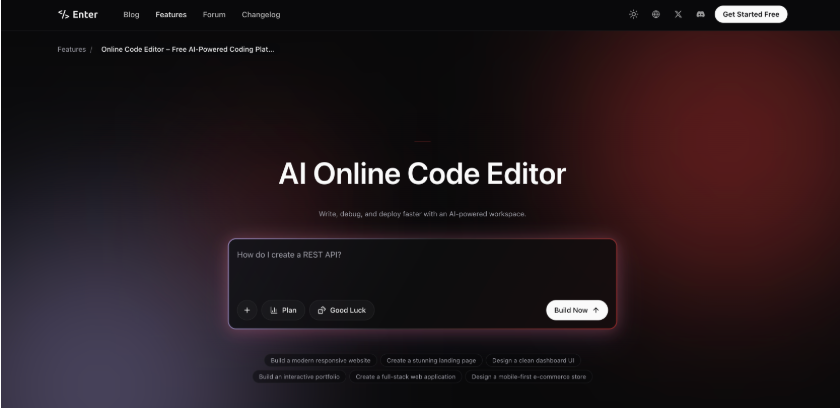
The irony is sharp. People who make spaces beautiful for a living often have websites that look like an afterthought. Stock photos, generic layouts, copy that could belong to any designer anywhere, and a portfolio that undersells work that is genuinely stunning in person. Potential clients land on these sites, feel nothing, and move on to someone whose website gave them that same feeling a well-designed room does. Enter Pro is one of the platforms interior designers are using to build something that actually reflects the quality of their work, and having a free code editor within the platform means precise visual adjustments, the kind designers actually care about, are entirely within reach without hiring a web developer.
The Portfolio Problem Most Designers Do Not Realize They Have
Here is a question worth sitting with. When did you last look at your portfolio page the way a potential client looks at it, as a complete stranger seeing your work for the very first time?
Most designers add projects to their portfolio as they complete them, without ever stepping back to look at the collection as a whole and asking whether it tells a coherent story. What emerges over time is often a mixed bag of early work and recent work, residential and commercial, styles that reflect different client briefs rather than a consistent design point of view.
A strong portfolio is not your complete body of work. It is a curated selection that communicates exactly the kind of projects you want more of and the aesthetic sensibility that runs through everything you do. If the work on your site does not reflect where you want your business to go, you will keep attracting the clients you have been getting rather than the ones you actually want.
How Your Website Communicates Before a Single Word Is Read
Interior design clients make emotional decisions. They are not comparing spreadsheets of your qualifications against a competitor’s. They are responding to how your website makes them feel and deciding within seconds whether this is someone whose taste they trust.
That means every design decision on your website, the font choices, the white space, the color palette, the image sizes, the way pages transition, is itself a demonstration of your aesthetic judgment. A cluttered, visually inconsistent website does not just fail to impress. It actively tells the visitor something about your design sensibility that you probably do not want said.
Your website is a designed space just like the rooms you create. It deserves the same level of intentional decision-making.
Finding the Right Platform for a Visual-First Business
Interior design websites live or die on how well they handle imagery. High resolution photos need to load quickly without compression artifacts. Gallery layouts need to feel considered rather than automatic. Project pages need enough flexibility to present each space with the care it deserves rather than forcing every project into the same rigid template.
Taking time to go through a thorough comparison of the best website maker options before building is genuinely important for designers precisely because the visual handling differences between platforms are significant. Some builders compress images in ways that are simply unacceptable for professional design work. Others limit how much control you have over layout in ways that prevent you from presenting projects the way they deserve to be presented. Knowing this before you build saves considerable frustration later.
Writing About Your Work in a Way That Adds to It Rather Than Explaining It
There is a particular kind of design writing that does real damage to a portfolio. It over-explains. It describes what is already visible in the photos. It uses so much industry terminology that it feels like it was written for other designers rather than for clients. It lists material specifications when the client just wants to understand how the space feels to be in.
Good design writing does something different. It gives context that the photos cannot. It tells the story of the client’s life that shaped the brief. It describes the challenge that the design solved. It captures the feeling of the finished space in words that complement rather than compete with the images.
That kind of writing takes practice but it transforms a photo gallery into a genuinely compelling body of work. Clients reading it do not just see beautiful rooms. They see evidence of a designer who listens, thinks, and solves problems creatively.
The Inquiry and Onboarding Experience as a Design Statement
How a potential client experiences the process of reaching out to you and beginning a project says as much about your practice as your finished work does. A clunky contact form, a slow response, a confusing intake process, these create friction that undermines the impression your portfolio worked hard to build.
Your website can make this first step feel as considered as everything else. A well-designed inquiry form that asks the right questions without overwhelming a new client. A clear explanation of your process so people know what to expect. A page that helps clients understand whether they are the right fit for your practice before they reach out, saving time on both sides.
Enter Pro gives designers enough flexibility to build these touchpoints thoughtfully rather than defaulting to whatever a generic template provides. The difference between a forgettable inquiry experience and one that already feels like the beginning of a great project is often just a few deliberate decisions about how that part of your site is structured.
Attracting the Projects You Actually Want
Every interior designer has a dream project brief. Maybe it is a full residential renovation with complete creative freedom. Maybe it is high-end commercial work for hospitality clients. Maybe it is sustainable design for clients who share your values around materials and environmental impact.
The uncomfortable truth is that your website is currently attracting the clients it is designed to attract, whether you designed it that way intentionally or not. If you keep getting inquiries for small refresh projects when you want full renovations, or budget clients when you want to work at a higher price point, your website is part of the reason.
Auditing your site through the lens of your ideal project and ideal client, and making deliberate changes to the work you show, the language you use, and the story you tell about your practice, can shift the kinds of inquiries you receive more quickly than almost any other change you make to your marketing.
Conclusion
Interior design is one of those professions where the work genuinely speaks for itself, but only if the platform presenting it is worthy of the work. A website that handles your photography beautifully, communicates your design sensibility through every visual decision, tells the story behind your projects compellingly, and makes it easy for the right clients to reach out, that website does not just represent your business. For every potential client who finds you online before they ever see a room you have designed, it is your business. Treating it with the same care you bring to every project you take on is not optional. It is the job.